
The National Procurement Commission (NPC) has clarified the role and authority of Special Procurement Committees (SPC), describing them as part of a broader reform aimed at improving efficiency, transparency, and delivery of government projects.
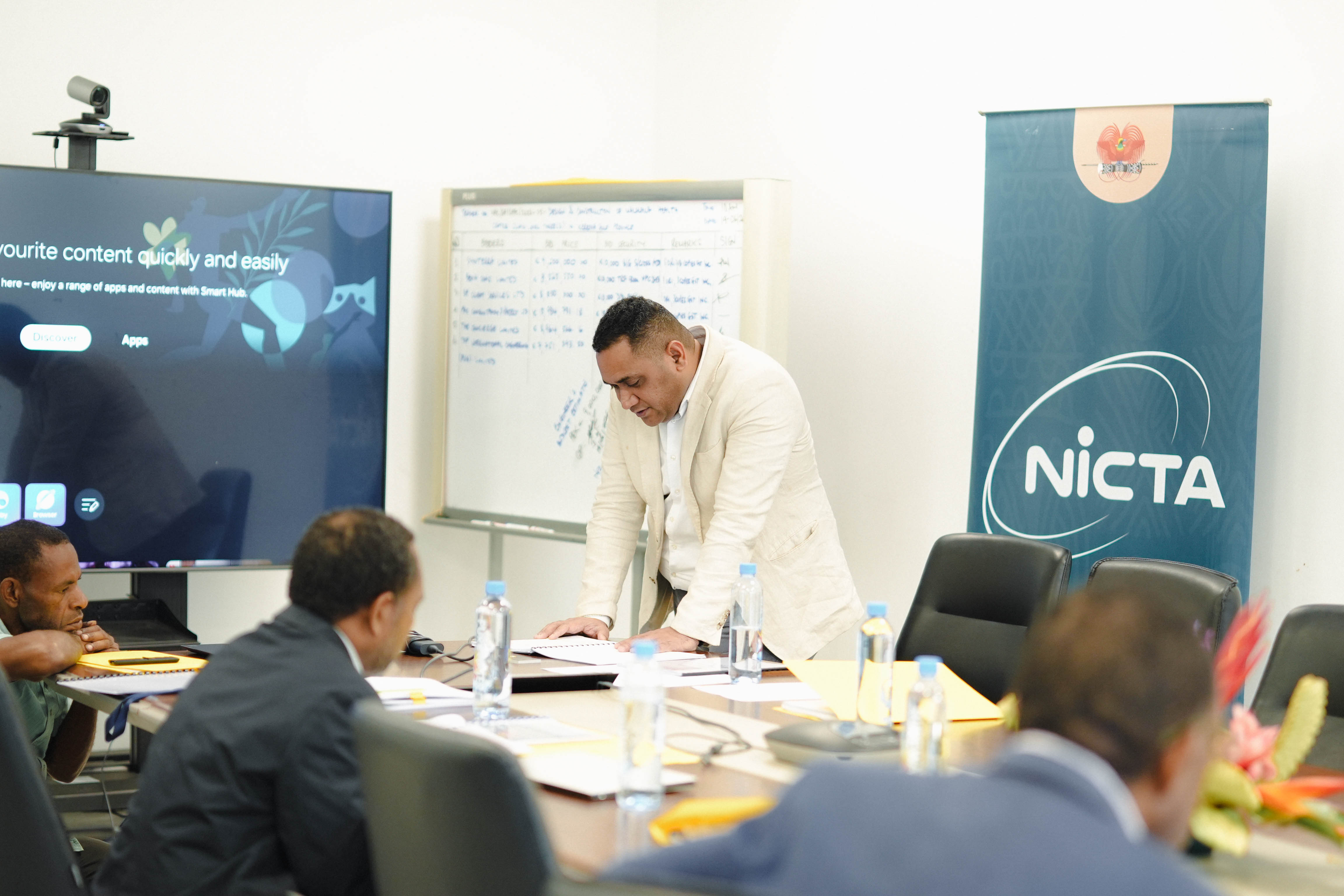
NPC Executive Manager Agaru Agarobe, who also serves as a newly sworn member of the NICTA Special Procurement Committee, explained the framework during a one day training session held prior to the committee’s swearing in in Yesterday June 24th.
He said the training was designed to prepare members for their responsibilities before formally assuming office.
“The one-day training was basically to bring the procurement committee members together and give them the opportunity to familiarize themselves with the procedures they are required to comply with before they subscribe as members of the procurement committee,” Mr. Agarobe said.
He said Special Procurement Committees are established to decentralize procurement authority within government agencies, allowing faster decision making while maintaining oversight.
“We have been establishing procurement committees for government departments and agencies. In this case, we give them Special Procurement Committee status at sub national level for provinces and districts,” he said.
Mr. Agarobe said the SPC framework allows agencies to manage procurement within a financial threshold of K1 million to K5 million.
He said procurement below K1 million remains under the authority of departmental heads or chief accounting officers, who may use the three-quotation system under the Public Finance Management Act.
“Anything less than K1 million falls under the three-quotation system where the departmental head or CEO can procure directly by comparing quotations and selecting the best value option,” he said.
For procurement between K1 million and K5 million, Mr. Agarobe said agencies must follow full procurement procedures under the National Procurement Act and National Procurement Commission guidelines, including public tender processes.
“That range requires public tender. We advertise, we invite bids from the open market, and companies submit proposals within the specified closing date and time,” he said.
He said submitted bids are then evaluated by appointed committees, with recommendations forwarded to the Special Procurement Committee for approval within its delegated authority.
Mr. Agarobe also outlined the three core components of procurement, technical, financial, and compliance.
He said the technical aspect involves agencies preparing specifications, scope of work, and terms of reference for projects.
The financial aspect ensures that funding has been properly appropriated before any procurement commitment is made.
He said compliance checks are conducted to confirm budget availability and adherence to procurement laws before processes proceed.
Mr. Agarobe said the system is designed to ensure value for money, transparency, and accountability while reducing delays in project implementation.
The training and subsequent swearing in of members, including Mr Agarobe, marks a key step in strengthening procurement governance within the ICT sector under NICTA’s Special Procurement Committee framework.