

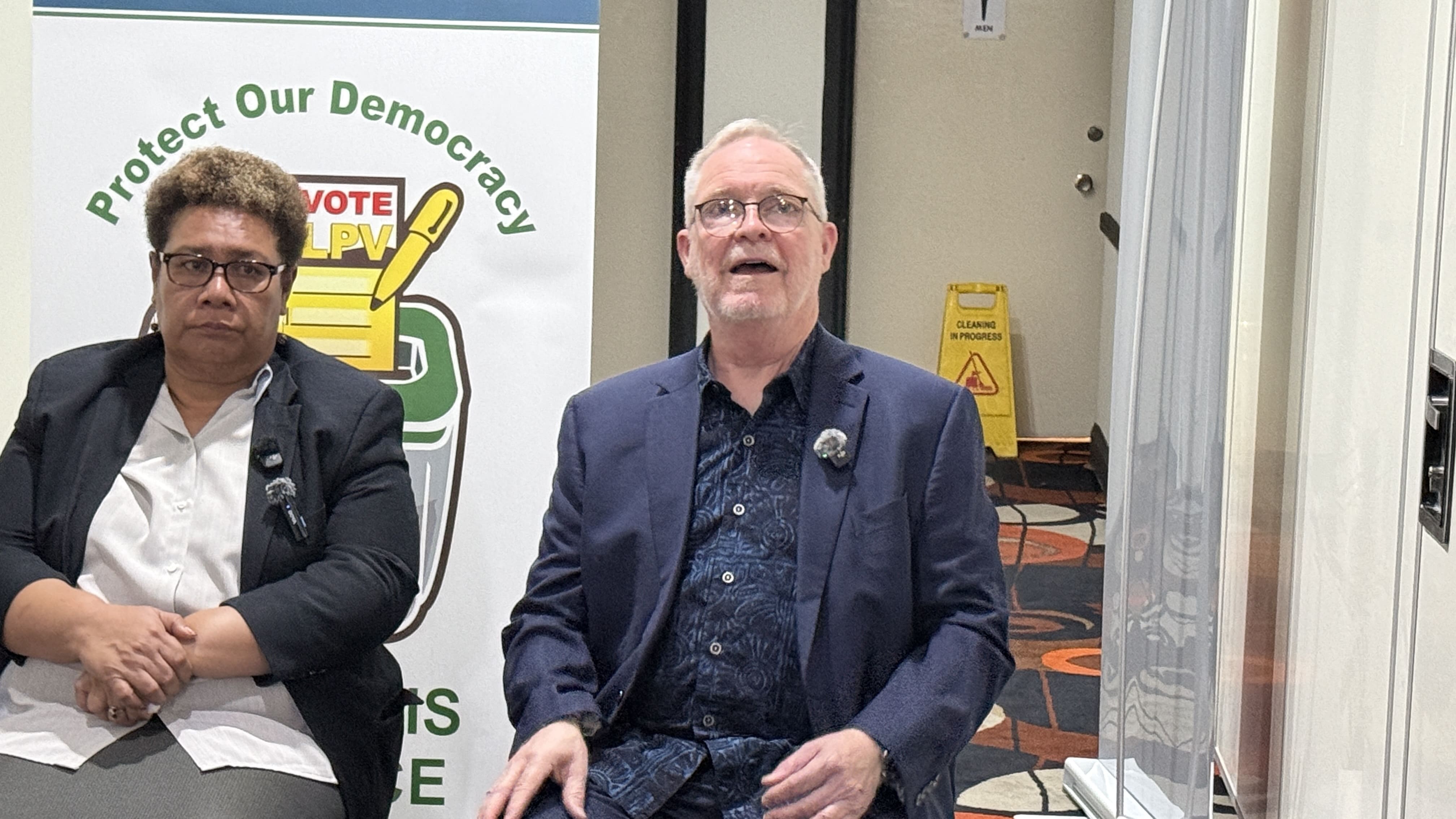
International Foundation for Electoral Systems (IFES) Senior Country Director Michael Yard has stressed that adequate funding for both the Papua New Guinea Electoral Commission (PNGEC) and the Royal Papua New Guinea Constabulary (RPNGC) will be critical to delivering a safe and credible 2027 National General Election.
Speaking to the media following the opening of the Joint Election Security Workshop on Wednesday 01st, Yard said Papua New Guinea's election security challenges reflect a growing global trend where political leaders refuse to accept election results, often triggering unrest and violence.
Drawing on his experience supporting elections in more than 50 countries, Yard said peaceful elections depend not only on planning but also on political acceptance of legitimate election outcomes.
"Over the last decade or longer, I've seen a trend. I have worked in elections in more than 50 different countries as an adviser, and I know that in some countries' security is not a major issue. Elections are just organized, people follow the rules and the laws, and there's very little violence after elections."
He said such examples are becoming increasingly rare.
"Unfortunately, over the last decade or longer, I've seen a trend towards politicians never accepting the outcome of an election. If I won, the election was free and fair, and if I didn't win, then the election was not fair."
Yard said political leaders who reject election results often encourage supporters to challenge the outcome, sometimes resulting in violence.
"By failing to accept the outcome of elections, it is a way of inciting followers and supporters of that candidate or political party to object, sometimes in volatile and violent ways. In Papua New Guinea, that's a pattern over the last several election cycles."
He said while careful planning between election authorities and security agencies is essential, planning alone cannot guarantee election security without sufficient financial support.
"It's ultimately important that there's adequate planning but planning alone isn't going to really do it."
Referring to the recent Local-Level Government elections, Yard said both the police and the Electoral Commission faced significant operational challenges because of limited funding.
"One of the patterns that we saw in the LLG elections was that the police were underfunded and did not have an adequate presence out in many of the provinces. The Electoral Commission also was underfunded and didn't have enough staff to really manage and control that."
He said sustained government investment in both institutions will be essential if election security plans are to be effectively implemented.
"Funding for both institutions is absolutely critical. No matter how much planning the institutions undertake, if they don't have the funding to implement those plans, then it's impossible to provide adequate electoral security."
The three-day Joint Election Security Workshop will end today July 3rd and it has been facilitated by IFES under its Enabling a Peaceful Environment to Administer Credible Elections (E-PEACE) program, brings together senior officers from the RPNGC and PNGEC to strengthen security coordination ahead of the 2027 National General Election.