

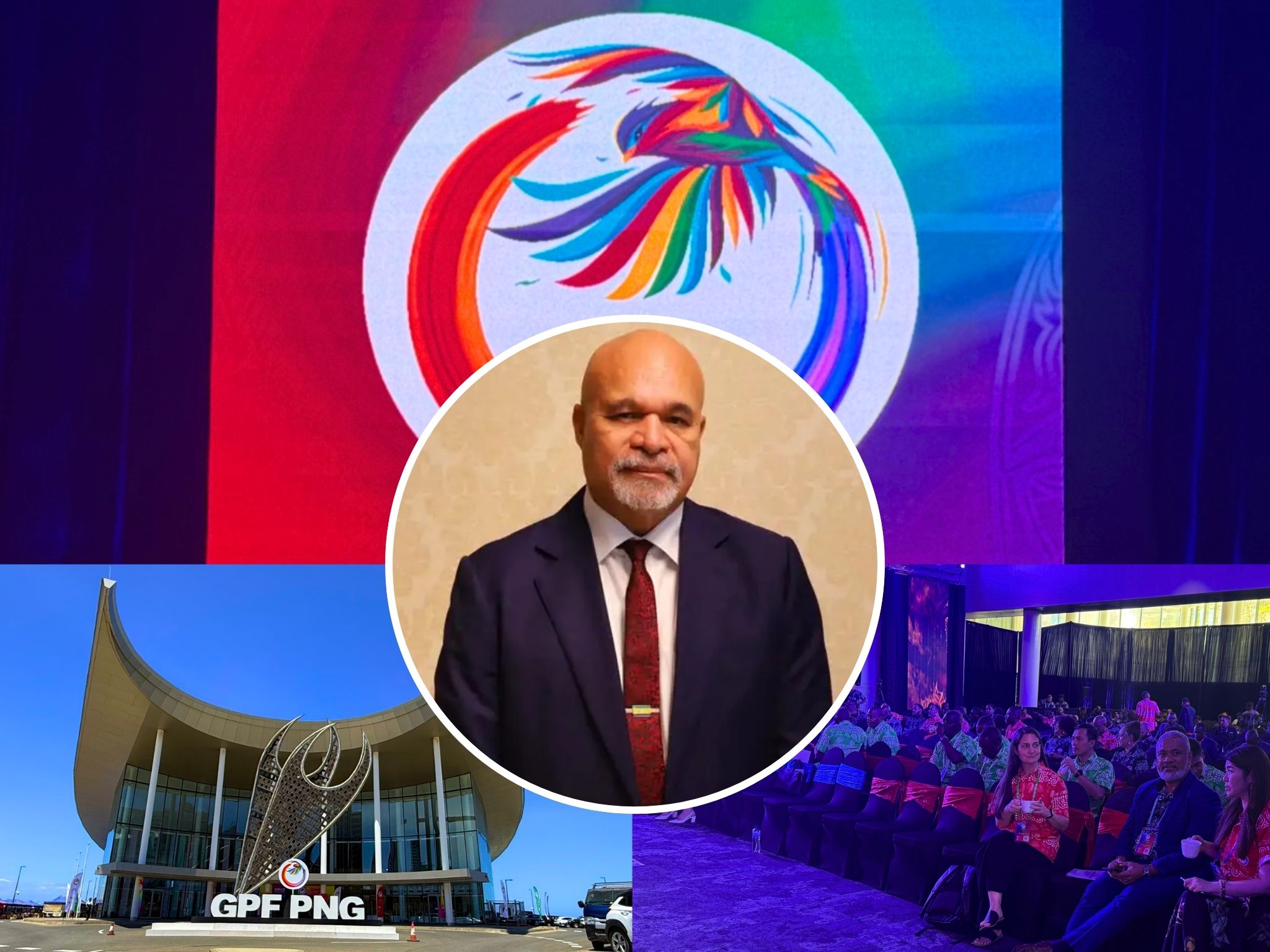
Financial inclusion must go beyond giving people access to financial services, with safety, trust, and the ability to use those services effectively also critical.
Speaking at the official opening of the 2026 Alliance for Financial Inclusion Global Policy Forum at the APEC Haus in Port Moresby, Deputy Prime Minister John Rosso said Papua New Guinea’s geography and large rural population make conventional approaches to financial inclusion difficult.
He said about 80% of the country’s population lives in rural communities spread across mountains, river systems and islands, requiring financial institutions to explore new ways of delivering services.
“Our experience has also taught us something more fundamental and that is access is only the beginning. Opening an account does not by itself create financial security.”
“Providing financial services does not result in meaningful financial inclusion if people cannot use those services safely or with confidence.”
“Bringing more people into the financial system cannot be regarded as progress if the system they enter is unsafe or unworthy of their trust.”
DPM Rosso said technology provides an opportunity for countries such as PNG to overcome barriers created by geography, infrastructure and cost, but innovation must be accompanied by safeguards.
“Technology gives countries such as ours an opportunity to overcome barriers of geography, infrastructure and cost.”
“It allows us to bring financial services to communities where a conventional bank branch may never be viable.”
“But with opportunity comes the responsibility. As services become faster and more accessible, financial institutions must ensure that the products they provide are safe, reliable and appropriate.”
“Consumers also need to understand the services they are using. Their money and personal information need to be protected.”
He stressed that regulators must ensure innovation takes place within a framework that protects consumers and maintains confidence in the financial system.
“Yes, innovation is important, but innovation does not remove that responsibility.”
He also linked financial inclusion to women’s control over financial resources, saying access to financial services should not leave people more vulnerable to financial abuse.
“The same principle applies to financial inclusion for women and their ability to have control over their own financial services.”
“In Papua New Guinea, our work through Empower Finance is bringing financial institutions together to examine how financial products and systems can be misused as instruments of financial abuse and what practical safeguards can be built into those services.”
“A person is not genuinely financially included if access to financial services makes them more vulnerable. Trust, safety and control over financial resources are part of inclusion too.”
Additionally, DPM Rosso highlighted that financial inclusion also has an important role in helping communities and businesses prepare for and recover from economic and climate-related shocks.
“Our communities in the Pacific Islands, among those exposed to climate change, financial services cannot prevent a drought, a flood or a severe weather event, but they make an enormous difference to whether people and businesses are able to prepare for them, absorb the shock and recover.”
He noted that PNG has included inclusive green finance into its wider financial inclusion agenda, shifting the focus to implementation following discussions at the Global Inclusive Green Finance Conference held earlier in the week.
“The challenge now is to make them work. The test is not simply whether a policy exists, the test is whether that policy leads to practical outcomes.”
“Can farmers obtain finance to make their livelihoods more resilient? Can a small business invest in technology or equipment that allows it to grow? Can a household withstand an economic or climate shock without falling into deeper hardship? Can financial institutions develop products that respond to real needs while remaining commercially sustainable?”
He stated that responsibility for implementation does not rest with regulators alone, but requires cooperation among governments, regulators, financial institutions, development partners, technology providers, and communities.
“A resilient and inclusive financial system depends on all of its participants and on each one understanding the responsibility they carry.”
He said the AFI network provides an opportunity for policymakers and regulators from emerging and developing economies to share experiences and learn from both successful and unsuccessful reforms.
“Peer learning is not about simply taking another country’s solution because it has worked elsewhere.”
“It is about understanding what was tried, why it was tried, what worked and what did not, and what might be adapted to our own circumstances.”
DPM Rosso said PNG enters the forum with its own experience and challenges while remaining open to lessons from other AFI member countries.
“We have experience that we are proud to share. We have challenges that we have yet not resolved. And we have much to learn from the experience of others.”
He said the central challenge for financial inclusion is to build systems that people can trust and use safely.
“Financial inclusion cannot be meaningful if people are brought into a financial system that they cannot trust, cannot use safely and cannot rely upon when circumstances become difficult.”
“An economy cannot be resilient while large parts of its population remain financially excluded.”
“Our task is not simply to bring more people into the financial system; it is to build financial systems worthy of their participation.”
He reinforced that these systems must be stable, trusted, and capable of allowing people to participate, invest, adapt, and recover.
Port Moresby is hosting around 700 senior officials and financial sector leaders from September 1 to 4 for the 2026 AFI Global Policy Forum, a four-day summit dedicated to shaping resilient and inclusive financial systems.