

The Department of Finance is pushing to modernize the way public money is managed by training government agencies to transition from paper cheques to Electronic Funds Transfer (EFT) as part of broader public financial management reforms under the Public Finance Management Act (PFMA).
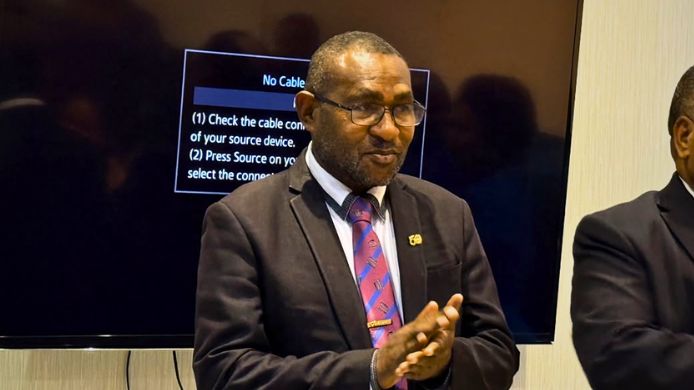
Speaking during the awarding presentation of certificates for the Department of Finance's Public Finance Management Act Training attended by officers from the Office of Censorship, Finance Secretary Samuel Penias said the Government is working towards phasing out cheque payments by 2027 while strengthening compliance with the PFMA across the public service.
He said the reforms are aimed at improving accountability, transparency and efficiency in the management of public funds.
"All the private sector has gone cheque less, except for us," Mr. Penias said.
The Department has already begun rolling out Electronic Funds Transfer (EFT) systems in the provinces, with the latest rollout taking place across the Momase Region.
Mr. Penias said he wants all government agencies to ensure payments and repayments are processed electronically by 2027.
"I'd like to see all agencies of government ensure repayments are done online or through the EFT process by 2027," he said.
Mr. Penias said the long term goal is for government agencies to completely move away from cheque payments, adding that once the transition is complete, government cheque printing is expected to cease.
"Bank of Papua New Guinea will not allow any more cheque printing in government."
He acknowledged the transition would take time as government agencies continue upgrading their systems and adapting to digital payment processes.
"We need to start slowly and get EFT done."
Alongside the digital payment rollout, the Department has introduced a new seven volume Financial Management Manual, designed to help public servants correctly apply the Public Finance Management Act and strengthen financial governance across government agencies.
Mr. Penias said departmental reviews have identified instances where government agencies have incorrectly applied financial laws and procedures.
"We're running reviews in the department, and we've found that many agencies are misusing and misapplying the law."
He said one contributing factor has been the absence of financial management training over the past five years.
"Training stopped for five years. That's why we want to start that again."
Mr. Penias said the Department will continue delivering training programs to strengthen the knowledge and capability of officers responsible for managing public funds.
"We'll continue to train people and continue to build that knowledge so everyone responsible for applying the Public Finance Management Act continues to improve."
The reforms are intended to modernize public financial management by digitizing government payment systems while strengthening compliance with the Public Finance Management Act, improving accountability and building financial management capacity across the public service.