
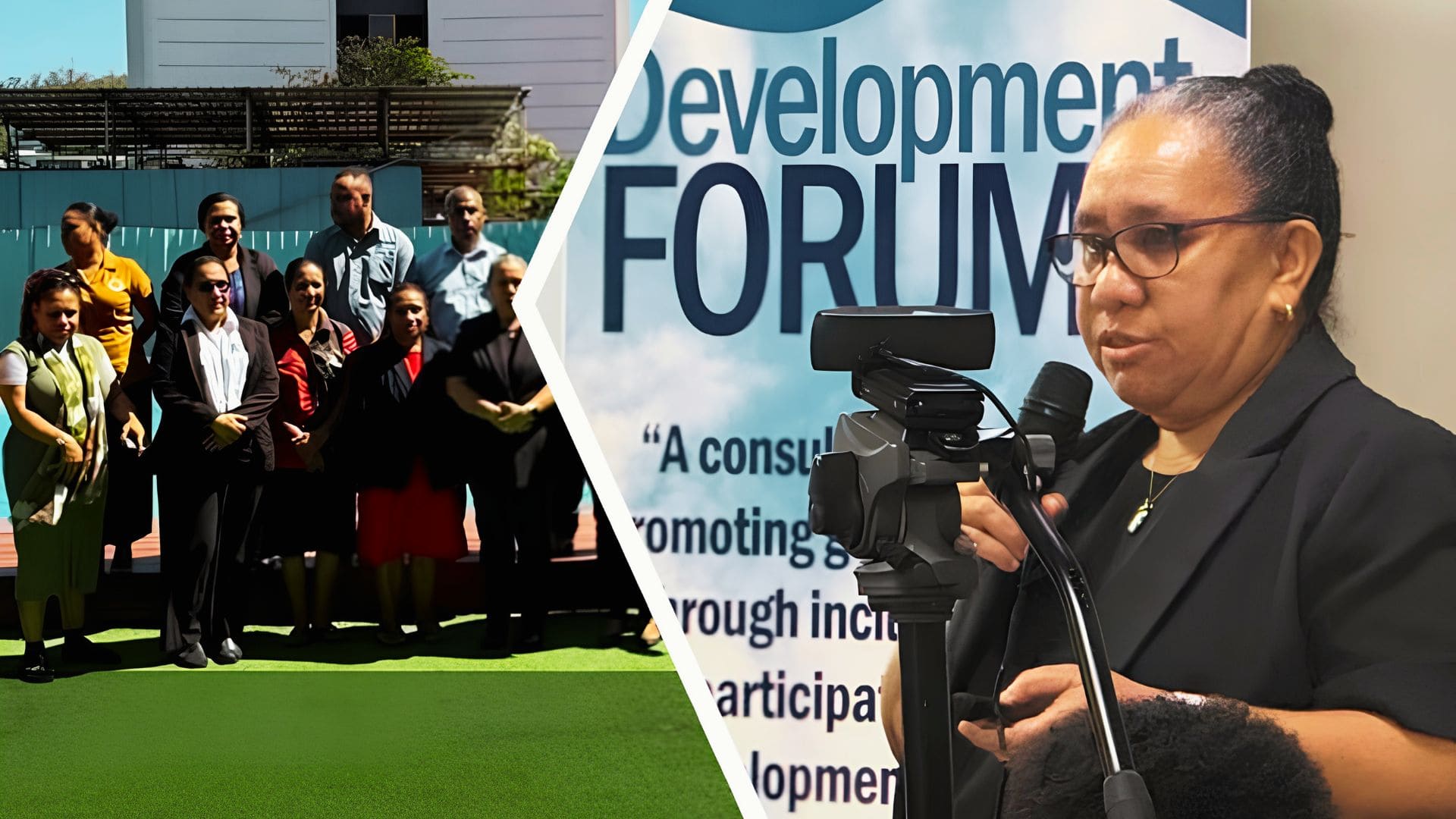
The CIMC Transport and Infrastructure Sectoral Committee reconvened for its first meeting of 2026 on Wednesday, June 3rd, bringing together key stakeholders to address long-standing transport and infrastructure challenges affecting the country.
Held at the Crown Hotel in Port Moresby city today, the meeting brought together representatives from the Civil Aviation Safety Authority (CASA), Motor Vehicle Insurance Limited (MVIL), Department of Works and Highways, PNG Ports Corporation, Department of Information and Communications Technology (DICT) but there were some major agencies that weren't present like National Maritime Safety Authority (NMSA), National Airports Corporation (NAC), Road Traffic Authority (RTA), and other sector stakeholders.
The meeting was chaired by former Institute of Engineers Papua New Guinea (IEPNG) President Mrs. Edea Bourage.
Mrs. Bourage noted that the committee had not met throughout 2025 due to the absence of a chairperson, with the previous meeting held on April 4th, 2024, under former chairperson Philip Habon.
During the meeting, Mrs. Bourage presented an overview of transport and infrastructure issues raised by the committee between 2018 and 2024.
Among the key concerns highlighted were legislative and institutional reforms, accessibility and inclusion in public transport systems, enforcement and asset protection, urban transport coordination, emerging regulatory risks, government funding gaps, and sustainable infrastructure maintenance.
“The subcommittee has identified the right issues in the last 10 years. The next step is disciplined and structured implementation,” Mrs. Bourage said.
She said many of the issues identified over the years remain unresolved due to weak coordination, unclear institutional responsibilities, and limited implementation of recommendations.
“There is a lack of clarity on institutional responsibility. Who is doing what? That is something that is not really clear,” she said.
Mrs. Bourage also highlighted accessibility challenges within public transport infrastructure, particularly for people living with disabilities.
“There has been no progress on accessibility, particularly in public transport infrastructure,” she said.
According to the committee brief, the meeting was convened to re-engage stakeholders, address significant outstanding action items from previous meetings, promote information sharing among sector agencies, and develop strategies to address challenges affecting the transport sector.
Expected outcomes include improving stakeholder awareness of the committee's work, maintaining consistent engagement among sector agencies, and addressing outstanding action items that have remained unresolved.
Mrs. Bourage stressed that future committee meetings must focus on accountability and measurable outcomes.
“We cannot just name an organization. There must be a person responsible for each action item,” she said.
The Transport and Infrastructure Sectoral Committee is one of eleven sectoral committees established by the Consultative Implementation and Monitoring Council (CIMC) to identify and discuss challenges affecting various sectors of society and develop policy recommendations through consultation between government, private sector, civil society, churches, and development partners.
CIMC facilitates national dialogue on public policy issues through annual development forums and regular sectoral committee meetings, seminars, and workshops.
The committee is expected to meet regularly throughout the year as members work to advance outstanding reforms, strengthen inter-agency coordination, and improve transport and infrastructure services nationwide.