

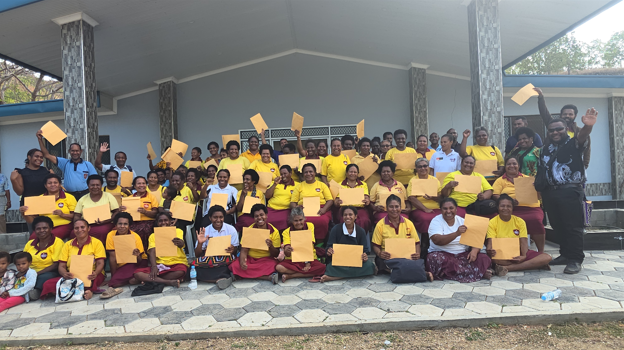
Seventy-two (72) women leaders from the Seventh-day Adventist (SDA) Church in Moresby South recently completed a three-day financial literacy training and received certification.
The training, delivered by the Informal Economy Section of the Department for Community Development and Religion, equipped participants with practical knowledge on budgeting, saving, and responsible financial management.
The closing ceremony was marked by emotional testimonies from participants, with several women expressing gratitude for the opportunity and sharing the financial struggles they face in their daily lives.
Assistant Leader of Koki SDA Church, Glendalyn Auma, said the training had changed the way participants think about managing their finances.
"We learned the importance of saving money and avoiding the habit of carrying cash to reduce unnecessary spending. We now have the advantage of having our own bank accounts.”
Moresby South District Director David Gairo commended the Department for delivering a program that addressed the practical needs of women in the community.
He congratulated the participants on completing the training and encouraged them to apply the knowledge gained to improve their financial discipline and achieve greater economic independence.
Speaking on behalf of Department Secretary Jerry Ubase, Assistant Director for Informal Economy Cecilia Wrondimi highlighted the critical role of the informal economy in Papua New Guinea.
"About 80 to 90 percent of our people are engaged in informal economic activities. It is a driving force of the formal economy, employing more people than the formal sector. However, many remain unbanked, unregistered, and unprotected.”
Additionally, she said the training was designed to help participants transition from informal economic activities into formally recognized small and medium enterprises (SMEs), enabling them to access greater financial opportunities.
"With these certified skills, you can begin saving with Mama Bank, register with the Investment Promotion Authority (IPA), and formally establish yourselves as SMEs.”
She described the initiative as an important pathway towards improved financial inclusion, increased economic participation, and long-term sustainability for women entrepreneurs.
Ms. Wrondimi also revealed that the Department is finalizing the National Informal Economy Policy, which is expected to be submitted to the National Executive Council (NEC) for approval later this year.