
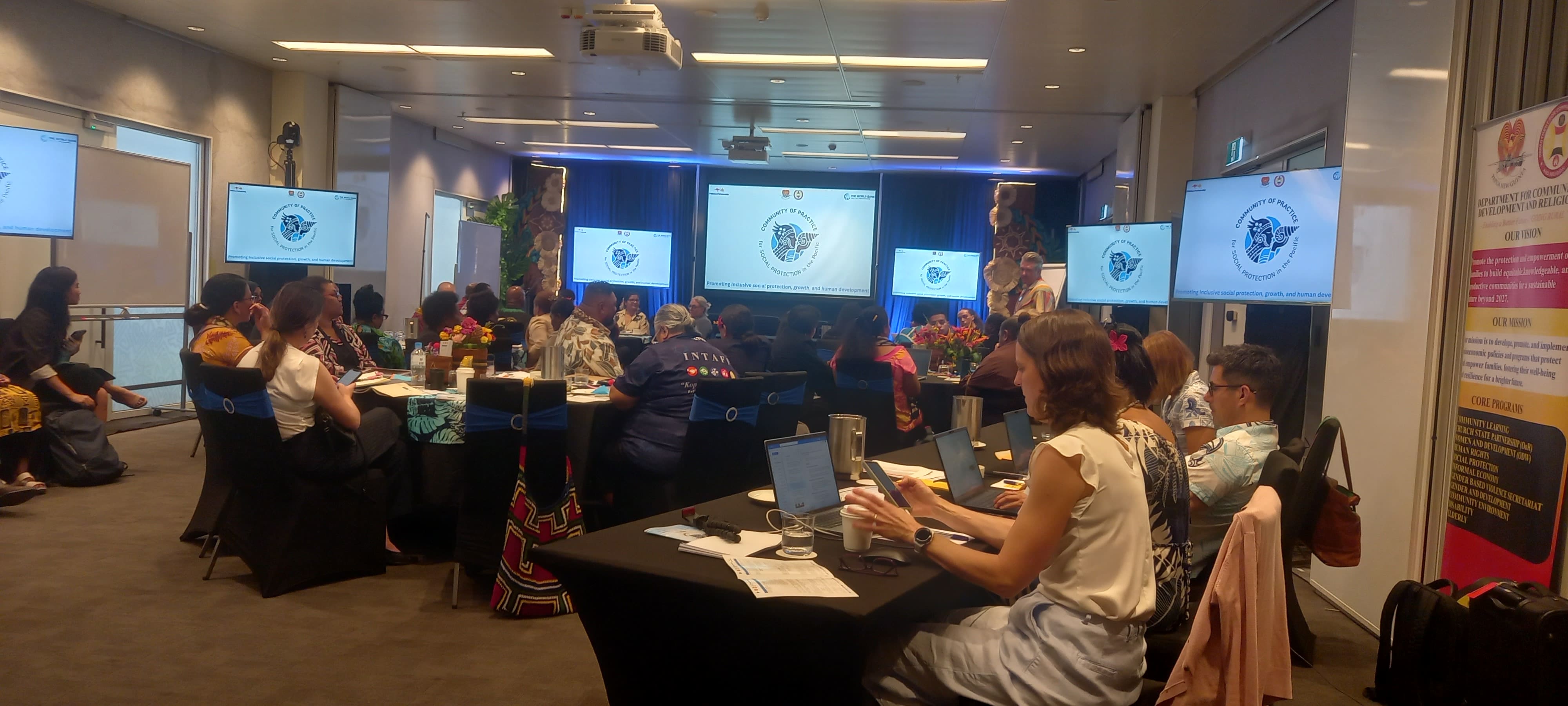
Delegates from twelve Pacific Island countries who attended the 2nd Face-to-Face Pacific Community of Practice on Social Protection Conference at Hilton Hotel, in Port Moresby, expressed interest in the Social Protection Policy Framework presented by the PNG Social Protection team.
Assistant Director for Social Protection with the Department for Community Development and Religion, Mr. Allan Gene gave a detail insight of the Social Protection Policy Framework, that drew in few reactions from the other delegates, which was discussed in the Q & A session after his presentation.
According to Mr. Gene’s presentation, the Policy Strategic Direction, is grounded on five Guiding Values which are, Inclusivity, empowerment, integrity, collaboration and sustainability.
He said that it is all about building a just and inclusive nation, together.
The Social Protection Policy also highlighted the social and economic issues faced, including, High rate of Gender-Based-Violence (GBV) & Sorcery Accusation Related Violence (SARV), High rates of Child Nutrition & Stunting, poor enrolment in ECD & school dropouts, inadequate housing and homeless, lack of government services and infrastructure at the rural communities, lack of social and economic opportunities and uncontrolled rural-urban migration.
The policy focuses on the vulnerable and disadvantaged group prioritizing seven key areas:
1. Children (0-18 years)
2. Child Nutrition
3. Youth (12-35 years)
4. Elderly (65+ years)
5. Persons with Disability
6. Survivors of GBV/SARV
7. Marginalized Groups/Communities
Centered on these seven key areas, the proposed programs include services and infrastructure, pensions, public works income generation, free education and scholarships for tertiary students, early childhood care and development, maternal and child health and nutrition, food vouchers, and cash transfers.
Mr. Gene stressed that the financing part of the policy programs is definitely a daunting challenge.
However, the development of partners and donor agencies has been the main go-to partners in terms of the program roll-out.
On behalf of the government, the department sincerely thanks the partners for their continuous support.
“Great partnerships and collaboration are needed right across- starting with government agencies, corporate organizations, state-owned-enterprises, development partners, non-government organizations (NGO’s), faith-based and community-based organizations (FBOs/CBOs).”
“Our goal is to leverage collective strengths and resources to deliver lasting impacts and improve lives and livelihoods.”