

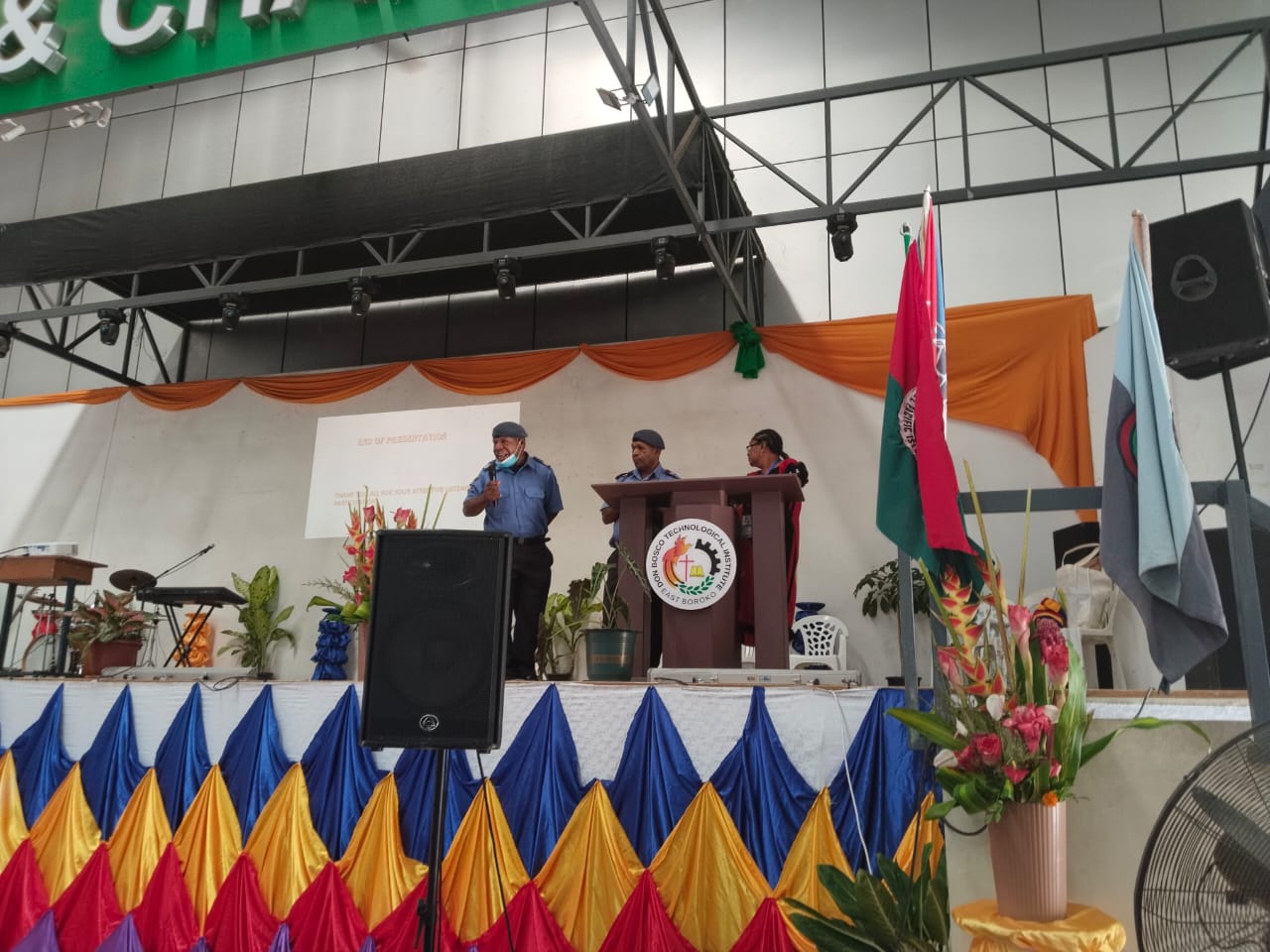
Understanding when and how to seek help was a key message delivered to military wives during a Family Sexual Violence Awareness Program held as part of the 9th Biannual Military Wives Convention in Port Moresby.
Officers from the Royal Papua New Guinea Constabulary's Family Sexual Violence Unit shared information on domestic violence, victims' rights and the support services available to those affected by abuse.
Acting Director of the Family Sexual Violence Directorate, Chief Sergeant Job Eremugo and Deputy Director Senior Sergeant Wasima Kauvianda led the awareness session, outlining the role of the Family Sexual Violence Unit and the support mechanisms available to victims throughout the country.
The officers explained that the unit was established in 2009 and now operates 54 Family Sexual Violence Units with 98 personnel stationed across Papua New Guinea's 22 provinces.
Participants were informed that the unit receives and registers complaints, investigates cases, apprehends offenders, assists victims to obtain Interim Protection Orders, prepares court files and works closely with other agencies to ensure victims receive appropriate support and protection.
The presentation highlighted that family and sexual violence can take many forms, including physical assault, verbal abuse, intimidation, threats and psychological abuse.
Women attending the convention were reminded that victims are not limited to adult women, but also include children, the elderly, persons living with disabilities and other vulnerable members of society.
FSVU officers stressed the importance of reporting incidents early and preserving evidence such as photographs of injuries, damaged property, clothing, and electronic communications that may assist investigations.
Participants also learned about the reporting process, with Family Sexual Violence Units serving as the first point of contact for most family and sexual violence cases. Depending on the nature of the complaint, victims may be referred for medical treatment, legal assistance, counselling services or protection orders.
The officers acknowledged that many victims continue to face challenges after reporting abuse, including intimidation by perpetrators, family pressure, and a lack of supportive environments.
The session also examined the cycle of violence, including periods of tension, abuse, denial and reconciliation, which often make it difficult for victims to leave abusive relationships. Factors such as fear, financial dependence, family expectations and concern for children were identified as common reasons victims remain in violent situations.
Military wives were encouraged to support one another, seek help when needed and use the information gained during the session to raise awareness within their families and communities.
The awareness session forms part of the convention's broader focus on empowering military wives with knowledge and practical tools to strengthen families, promote safety and contribute to violence-free communities.