

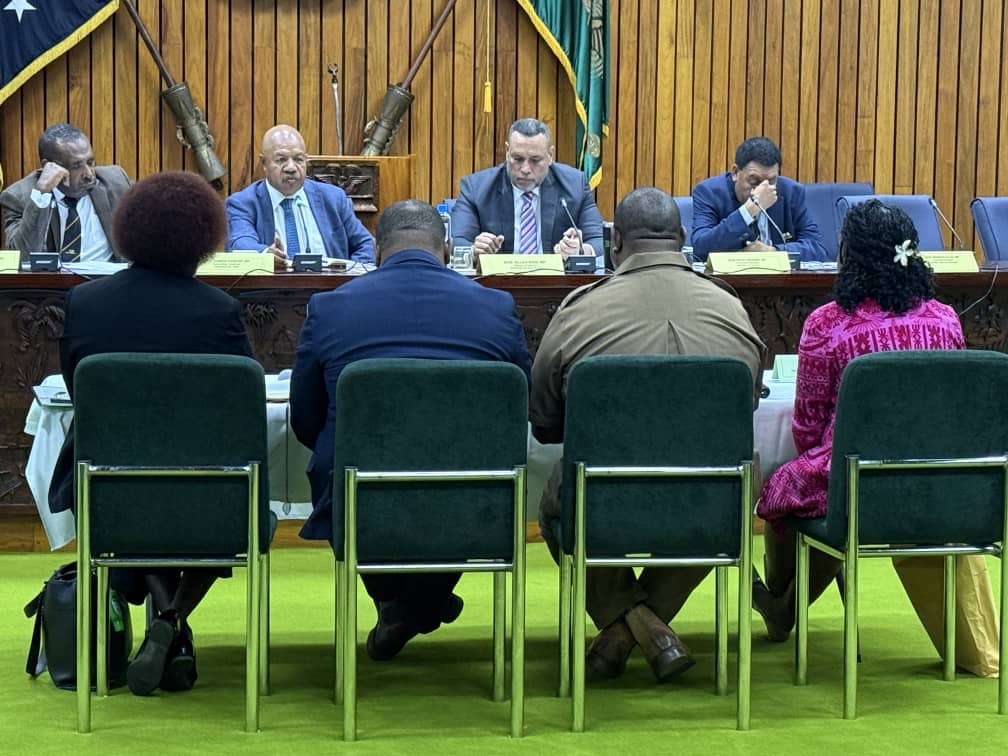
The Chairman of the Special Parliamentary Committee on Gender Equality and Women Empowerment (GEWE), NCD Governor Powes Parkop, highlighted the importance of monitoring policy outcomes to ensure development benefits reach communities.
He emphasized that effective reporting on policy indicators is essential for sustainable growth.
The Department for Community Development and Religion, on Monday, presented an update on the revised National Gender Policy. This revised policy is based on extensive consultations with stakeholders, partners, and government agencies, aiming to deliver tangible results in advancing gender equality across the country.
The first priority area is Women’s Economic Empowerment, including Leadership. The policy seeks to boost women’s participation in the economy and leadership roles. It includes temporary special measures for women’s representation in national elections, mentorship programs for young women, and promotes male advocacy engagement through partnerships with churches and civil society.
Economic initiatives focus on creating safe workplaces, improving access to finance and markets, and enacting legal reforms to secure women’s land and property rights. It also calls for amendments to employment laws to strengthen maternity and paternity leave and protect workers from harassment, especially women.
The policy also aims to expand access to essential health services, including reproductive health, cancer screenings, family planning, and HIV/AIDS support, addressing Women’s health and well-being. It also highlights strengthening health data collection disaggregated by gender and disability to address disparities and promote inclusive healthcare.
The third priority area focuses on Protection Against Gender-Based Violence. Whereby the policy aims to combat GBV across all sectors, from the public to the private, down to the sub-national levels and other levels. It also advocates for legal and workplace reforms, such as amendments to employment provisions and workplace harassment protections.
These measures are designed to create safer environments for women and foster gender-sensitive policies across all sectors.
The Department stated that, the development of this policy involved nation-wide consultations, with Development Partners, NGO’s and other stakeholders including, Bougainville stakeholders.
The Department also made it clear that, the policy will be developed in a way that policies are aligned with the specific functions, from which policy plans are developed and implemented.
They also clarify that the department is only providing the coordinating role as this is a government policy and it needs to be reviewed and aligned properly, but in no way, they are limiting the roles and responsibility of their partners and stakeholders.
Furthermore, the Department said that they are only stating on what the policy consultations has informed to what the stakeholders want to see in terms of outcomes and in terms of strategy and implementation level that they are collaborating to develop the policy plans.
The revised policy aligns with international commitments to gender equality and human rights. It provides a clear roadmap toward a more equitable society, with specific indicators to track progress in the coming years.