
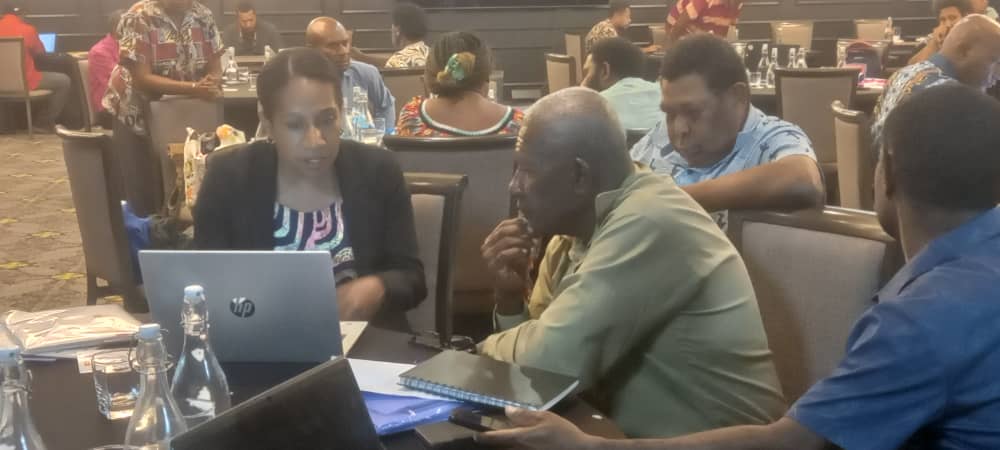
Provincial governments must take greater responsibility for funding work to prevent and respond to gender-based violence (GBV), while improving coordination with service providers and development partners, National GBV Secretariat Executive Director Diane Kambanei says.
Reflecting on provincial presentations at the Second GBV Workplan Plenary Workshop held in Port Moresby this week, Ms. Kambanei said many provincial focal points were operating with little or no support from their provincial or district budgets. Some rely heavily on development partners, churches and civil society organisations to carry out their work.
She cited West Sepik as receiving about K10,000 in provincial support, while Western Highlands had a K65,000 allocation that, she said, had not yet reached the focal point. Other provinces reported relying on partners, including private-sector companies and women’s organisations.
The National GBV Secretariat provides provinces with K100,000, but Ms. Kambanei stressed that this was intended to supplement and not replace the government funding.
“If a province contributes K100,000 and the Secretariat adds another K100,000, they can do a lot more. It was never meant to be the only funding the provincial focal points receive," Ms. Kambanei said.
She said the limited funding made it difficult for provinces to address GBV effectively, particularly in areas with challenging geography and communities that may only be reached by boat. More resources are also needed to establish district-level GBV coordination structures and improve access to support survivors.
Ms. Kambanei said the Secretariat wanted to use the workshop to strengthen provincial advocacy, including by bringing together the provinces’ experiences and concerns. She referred to the Permanent Parliamentary Committee inquiry as an opportunity to press for stronger provincial and district funding commitments.
Despite the constraints, she praised provincial teams for continuing their work. She highlighted New Ireland’s establishment of a GBV desk in Namatanai, saying that the initiative had been set up using only part of the funds provided by the Secretariat. She also commended provinces including Eastern Highlands and Western Highlands for progress made with limited resources.
This year’s workplans showed improvement from the first plenary, she said, with provincial representatives demonstrating a clearer understanding of how to connect activities to a strategy and plan their work.
A key priority, Ms. Kambanei said, is strengthening coordination among provincial government agencies, civil society organisations and service providers. Regular meetings of provincial GBV coordination mechanisms can help ensure workplans reflect local needs, reduce duplication, and make it clearer where partners can contribute.
“Government coordinates,” she said, explaining that provincial focal points should not be expected to manage every service themselves.
“When we coordinate, we share resources and the workload.”
She also called for stronger awareness among provincial leaders and private-sector partners about the role of GBV focal points. Clear workplans and functioning coordination committees, she said, would help partners identify where their support could make the greatest difference.
Ms. Kambanei said provincial focal points were often overstretched, with some carrying broad responsibilities with very small teams. Better coordination could ease that burden and help connect provinces with the government agencies, community organisations and businesses able to support their work.