

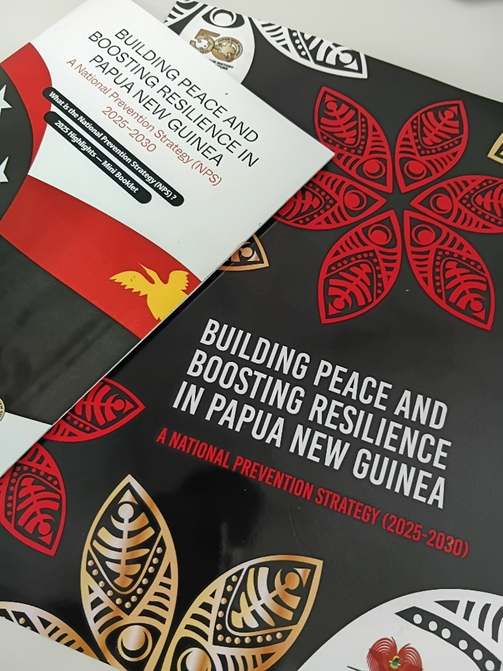
The Prime Minister's Department will lead the implementation of Papua New Guinea's National Prevention Strategy (2025-2030), a government-backed roadmap aimed at reducing conflict and violence by tackling their root causes and strengthening peace and resilience across the country.
Ms. Doreen Mandari, Director General of the Prime Minister's Department, said this during the Law-and-Order Sectoral Committee hosted by the Consultative Implementation & Monitoring Council in Port Moresby on Tuesday 10th November.
Presenting the strategy at meeting, Mandari said the Prime Minister's Department will take the lead in implementing and monitoring the five-year strategy, following its endorsement by Cabinet as a national priority.
As the agency responsible for monitoring National Executive Council decisions, the department has established a technical secretariat to oversee implementation, collect progress reports and provide updates to the Chief Secretary and Prime Minister.
The strategy, titled Building Peace and Boosting Resilience in Papua New Guinea: A National Prevention Strategy (2025-2030), was developed by the government with support from the World Bank and development partners to address escalating communal violence, urban insecurity, governance challenges and resource-related disputes
Mandari said the strategy adopts a prevention-focused approach, recognizing that conflict and violence continue to undermine development efforts and disproportionately affect women and young people.
"The strategy is about prevention. It is about addressing the drivers of conflict and violence before they escalate and create greater social and economic impacts," she said.
The strategy identifies five key objectives: improving access to services and opportunities for women and youth in conflict-affected areas; strengthening early warning and violence prevention systems; restoring public confidence in natural resource benefit-sharing arrangements; improving the management of disaster-related displacement and migration; and strengthening public accountability and transparency.
Mandari said the strategy places particular emphasis on resource-extraction areas where disputes over land, ownership and benefit sharing have often contributed to conflict and instability.
She said implementation would require a whole-of-government and whole-of-society approach involving government agencies, civil society organisations, churches, the private sector and development partners working together towards common peacebuilding goals
Support for implementation is currently being provided through partnerships with the World Bank, the United Nations and other stakeholders, while the Prime Minister's Department coordinates national efforts and tracks progress against the strategy's targets and milestones.
The National Prevention Strategy aligns with key national development frameworks, including Vision 2050, the Medium-Term Development Plan IV and other sector policies aimed at creating a safer and more secure environment for Papua New Guineans.