

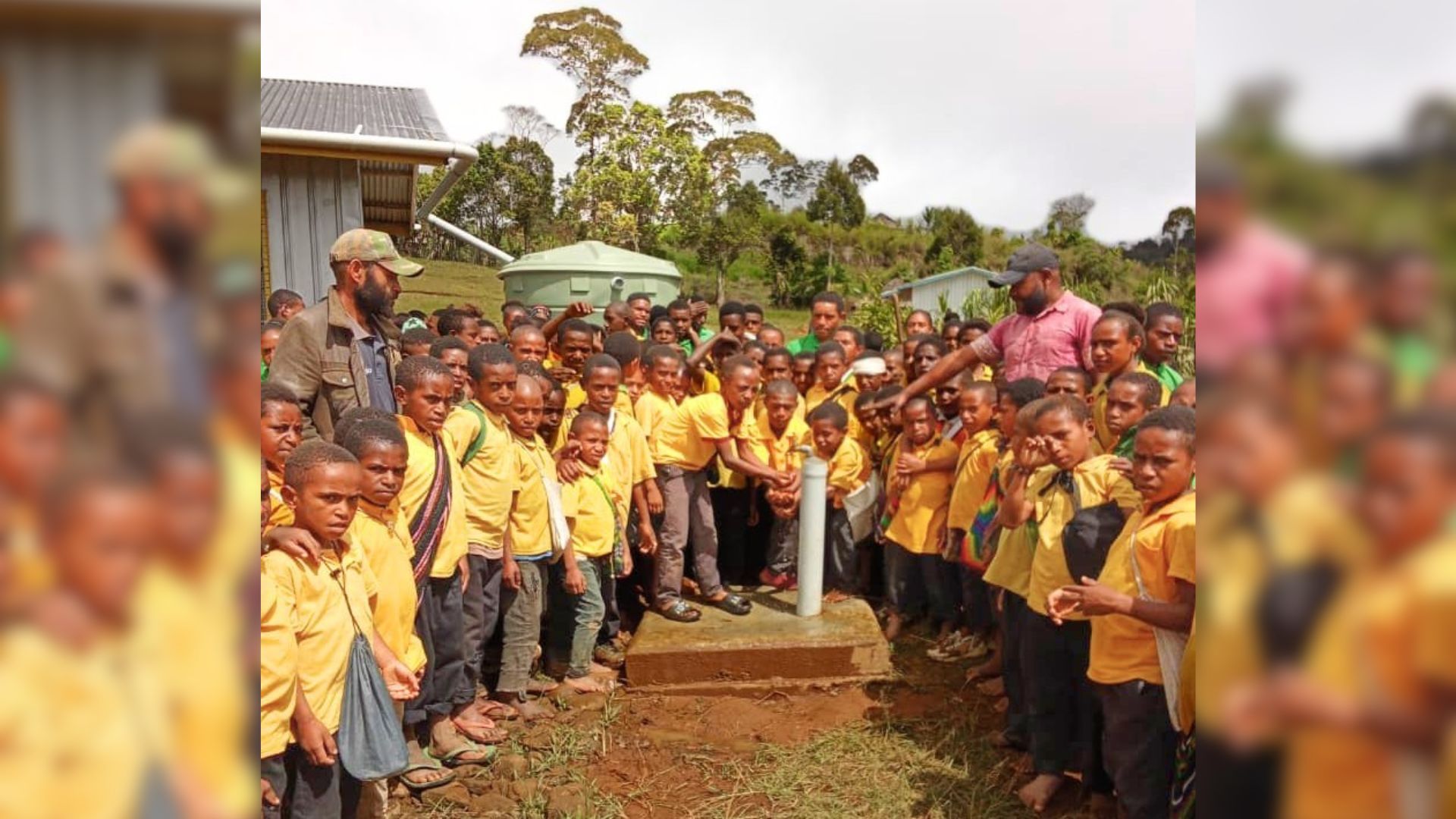
Students and teachers at the Lakira Primary School in the Southern Highlands province can now have access to clean and reliable water, all thanks to Kina Bank.
Kina Bank recently donated a 5,000 litre water tank to the primary school under its Strongim Komuniti Grant (SKG) program, led by Kina Bank staff member Sylvia Kotapu, who played a key role in coordinating the initiative and ensuring the donation addressed the school’s specific needs.
“As a member of this community, I have personally observed the dedication and resilience of our teachers, as well as the daily hardships faced by both staff and students, particularly in relation to water accessibility,” said Sylvia.
Located in a remote part of the Southern Highlands, Lakira Primary School serves children from surrounding rural communities where access to basic services, including safe water, remains a significant challenge.
The new water tank will help address daily water shortages, supporting a healthier learning environment, and easing the burden on both students and teachers.
Headmaster, Mr. Andrew Ambuya, on behalf of the school, teachers, students, and the wider community, expressed sincere appreciation to Kina Bank for the support.
“This contribution makes a real difference to our school. Access to clean water has always been a challenge, and this support will greatly improve the wellbeing of our students and staff. We are truly grateful to Kina Bank for this assistance,” Mr. Ambuya said.
The water tank was successfully collected and delivered to the school on 11 March 2026, marking an important signpost for the school and surrounding community.
Kina Bank’s Strongim Komuniti Grant program is an internal staff-driven initiative designed to support community-based projects across Papua New Guinea. The program provides an opportunity for Kina Bank employees to give back to their home communities by nominating and leading meaningful projects that address real local needs.
Through the Kina Bank’s SKG program, staff take an active role in identifying priority areas such as education, health, and community development, ensuring that support reaches places where it can have the greatest impact.