

“When we invest in young people, we invest in our nation’s future.”
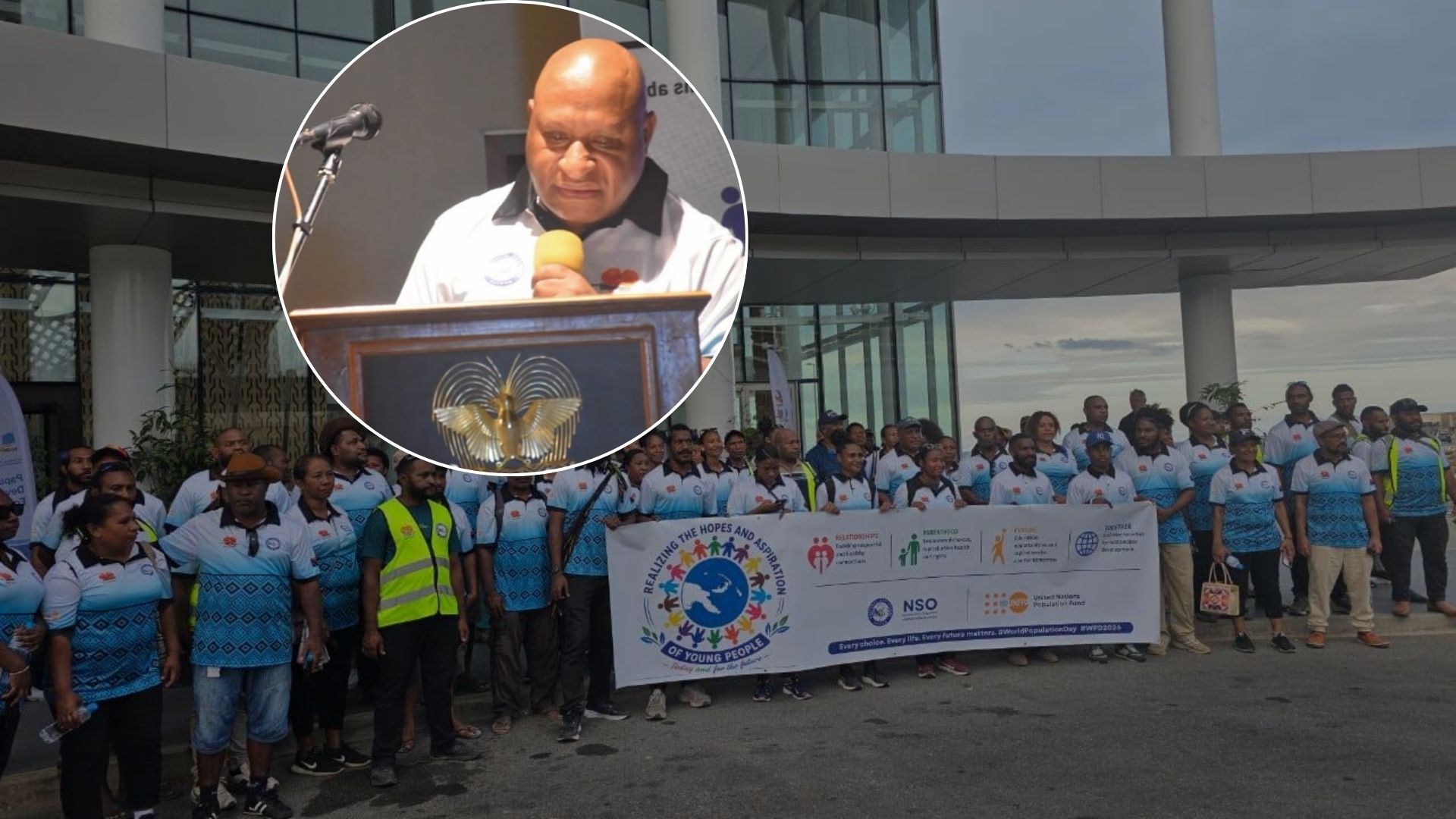
This was the statement made by National Statistician Mr. Alfred Mokae, who officially opened the World Population Day 2026 at APEC Haus following a morning walkathon through the Nation’s Capital on August 12th.
His address delivered a clear message to government leaders and policy planners: Papua New Guinea’s massive youth population is its greatest strategic asset but leveraging it will require replacing political assumptions with hard, reliable data.
With over half of the country’s population under 35 years of age, PNG sits at a pivotal tipping point.
Mr. Mokae framed the youth demographic as an urgent national priority that demands immediate, evidence-based intervention.
“The demographic dividend is not automatic,” Mr. Mokae emphasized. “It must be created through deliberate investment in education, health, skills, employment, and awareness for young people.”
To build the foundation for those investments, the National Statistical Office (NSO) is rolling out key data gathering operations nationwide.
Active field surveys including the Demographic Health Survey (DHS) and the Household Income and Expenditure Survey (HIES), will provide important evidence on circumstances and aspirations on the country’s population.
According to Mr. Mokae, these targeted operations pave the way for the upcoming National Population and Housing Census, which NSO officials plan to execute using modern digital collection tools to reach even the most remote, isolated communities.
“The NSO is committed to making the Census more modern, inclusive, digital, and efficient while ensuring that every person and community is counted.”
“The Census must not simply be another counting exercise; it must become a strategic national investment in the future.”
A key technical focus of this reform is integrating incoming census datasets directly with existing state infrastructure, such as the National Identification (NID) Program.
Supported by key partners like the United Nations Population Fund (UNFPA), Mr. Mokae stated that the NSO’s broader modernization agenda aims to build a strong statistical system that directly drives public policy, infrastructure development, and budget allocation.
As Papua New Guinea looks toward its economic future, the NSO’s mandate serves as a reminder that meaningful national progress begins with accurate numbers.
He concluded stating that by fulfilling the aspirations of PNG’s young population, this requires public and private institutions alike to anchor their strategic planning in solid, verifiable evidence.