

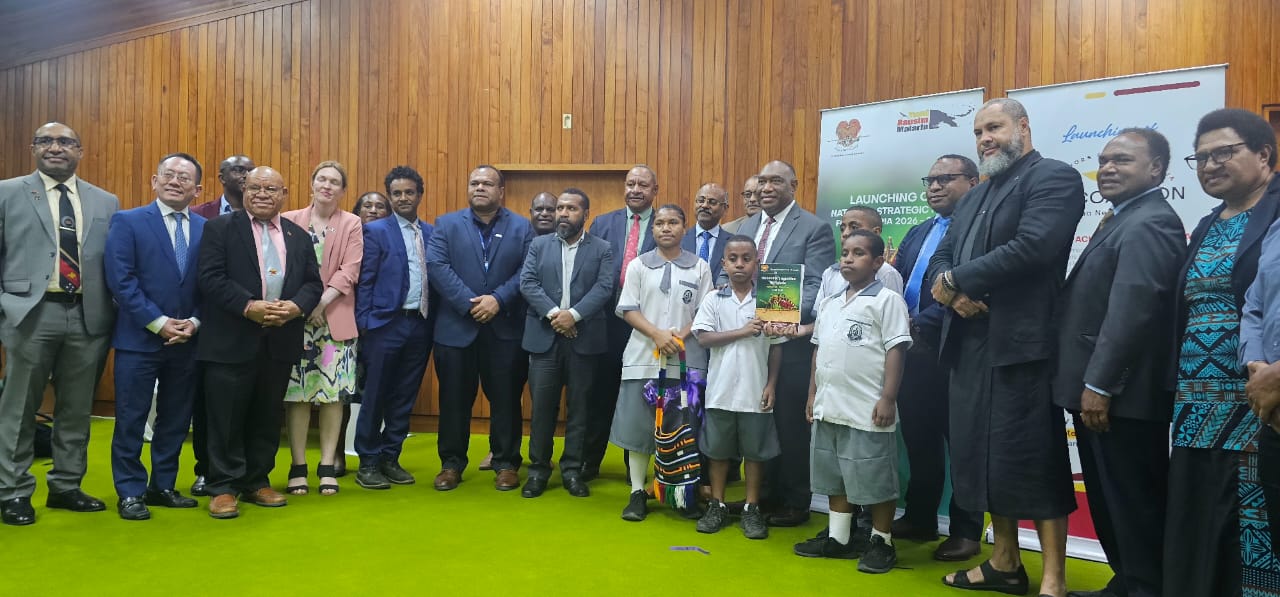
The government, in partnership with the Asia Pacific Leaders Malaria Alliance, has officially launched the Governors Ending Malaria (GEM) Coalition in a move aimed at accelerating national efforts to eliminate malaria by 2035.
The signing ceremony, held in recently Port Moresby, brought together senior political leaders including Minister for Health Elias Kapavore, Member of Parliament for Dei Desmond Paul Kipa, and governors from several high-burden provinces including Ramsey Pariwa, Gary Juffa, and Sasindran Muthuvel.
The GEM Coalition was first proposed at the Provincial Leaders’ Forum during the 8th Asia Pacific Leaders’ Summit on Malaria Elimination in 2024.
It brought together nine provinces including West New Britain, East New Britain, East Sepik, West Sepik, New Ireland, Milne Bay, Madang, Morobe, and Northern Province, which collectively account for approximately 86% of PNG’s malaria burden.
Minister Kapavore said the coalition marks a turning point in the country’s public health response.
“Malaria is not a burden we must accept forever. Many countries have eliminated malaria; Papua New Guinea can do the same,” he said, stressing that provincial leadership will be critical to driving results on the ground.
Under the new framework, provincial governments will take a leading role in coordinating malaria control activities, improving community engagement, and strengthening domestic resource mobilization.
The approach is designed to move away from a uniform national strategy toward locally tailored interventions based on disease patterns in each district.
Meanwhile, Oro Governor Gary Juffa called for stronger collaboration between government, development partners, and the private sector, urging businesses to contribute expertise and resources in addition to funding.
He also emphasized the importance of evidence-based interventions supported by international health agencies.
West New Britain Governor Sasindran Muthuvel also shared similar sentiments that provinces must take urgent and decisive action to protect communities, pledging stronger engagement and intensified local efforts to reduce infection rates.
Alongside the coalition launch on the May 26th, the National Department of Health (NDoH) also unveiled the National Strategic Plan for Malaria 2026-2030, which outlines a five-year roadmap focused on equity, strengthened health systems, and community-driven implementation.
The plan aims to improve targeted responses using epidemiological data and WHO-recommended strategies.
Minister Kapavore said the updated strategy represents a shift toward a more localized and evidence-based model.
“We will adopt World health Organization (WHO)-recommended approaches and match interventions to the specific malaria burden of each district,” he said, adding that the goal is to maximize the impact of every Kina spent.
The government has committed PGK16.7 million toward malaria drugs and essential supplies, while the Global Fund will contribute an additional USD32 million over the next four years.
However, officials acknowledged that funding gaps remain and called for stronger support from development partners and provincial administrations.
With renewed political commitment, increased financing, and a coordinated provincial-led strategy, Papua New Guinea has set an ambitious course to eliminate malaria as a public health threat by 2035.