

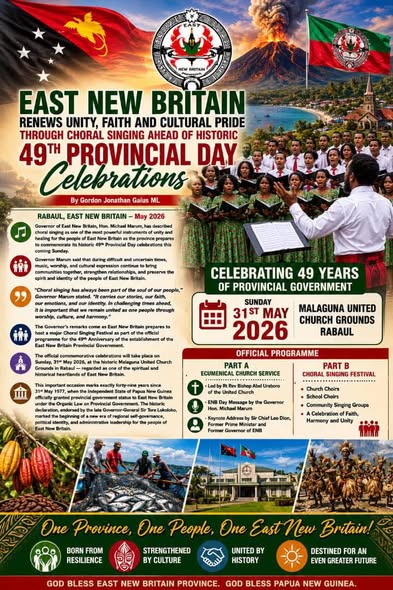
Governor of East New Britain (ENB) Michael Marum has described choral singing as one of the most powerful instruments of unity and healing for the people of East New Britain as the province marks its historic 49th Provincial Day celebrations today, Sunday May 31st.
Governor Marum said that during difficult and uncertain times, music, worship, and cultural expression continue to bring communities together, strengthen relationships, and preserve the spirit and identity of the people of ENB.
“Choral singing has always been part of the soul of our people,” Governor Marum stated. “It carries our stories, our faith, our emotions, and our identity.”
“In challenging times ahead, it is important that we remain united as one people through worship, culture, and harmony.”
The official commemorative celebrations will take place at the historic Malaguna United Church Grounds in Rabaul, regarded as one of the spiritual and historical heartlands in the province.
This important occasion themed, “We are a people born from resilience. We are strengthened by culture. We are united by history. And we are destined for an even greater future,” marks 49 years since the Independent State of Papua New Guinea officially granted provincial government status to East New Britain under the Organic Law on Provincial Government.
The historic declaration endorsed by the late Governor-General Sir Tore Lokoloko, marked the beginning of a new era of regional self-governance, political identity, and administrative leadership for the people of ENB.
This year’s programme is conducted in two significant parts reflecting the province’s strong foundations of faith, culture, and unity.
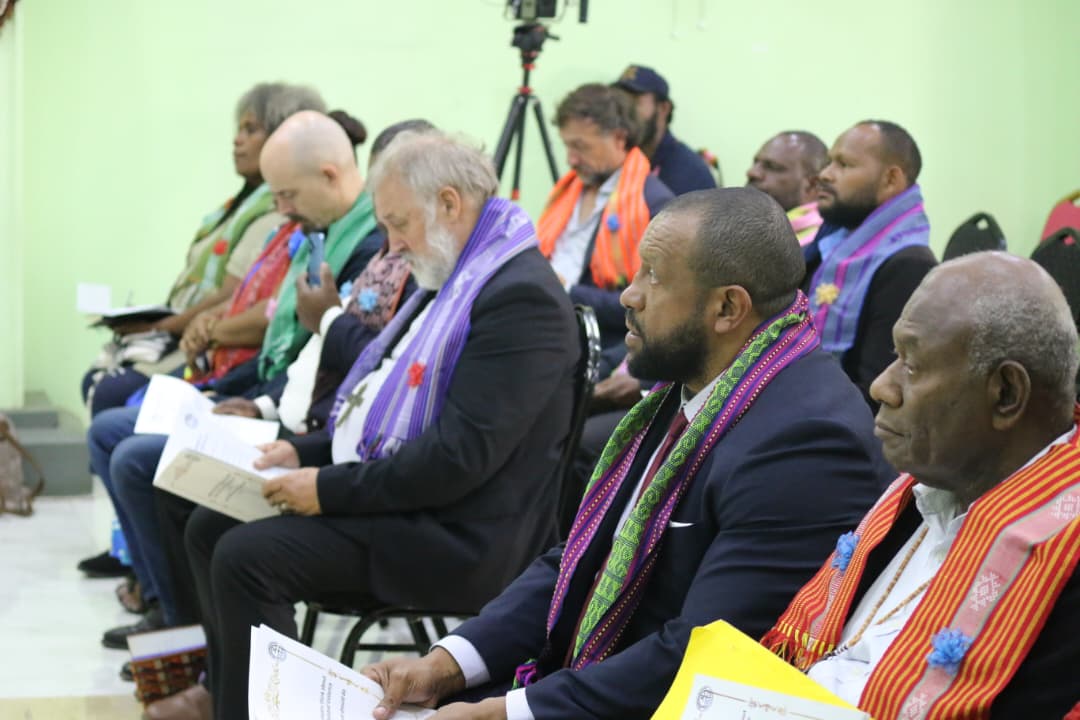
The first part of the official programme started with an Ecumenical Church Service led by the Rt Reverend Bishop Abel Uraboro of the United Church.
The service brought together churches and Christian denominations from throughout the province in thanksgiving, reflection, and prayer for East New Britain and its people.
The official ENB Day Message was delivered by Governor Marum while the keynote address was presented by former Deputy Prime Minister and former Governor of East New Britain Sir Chief Leo Dion, who is known as one of the province’s most respected senior statesmen and leaders.
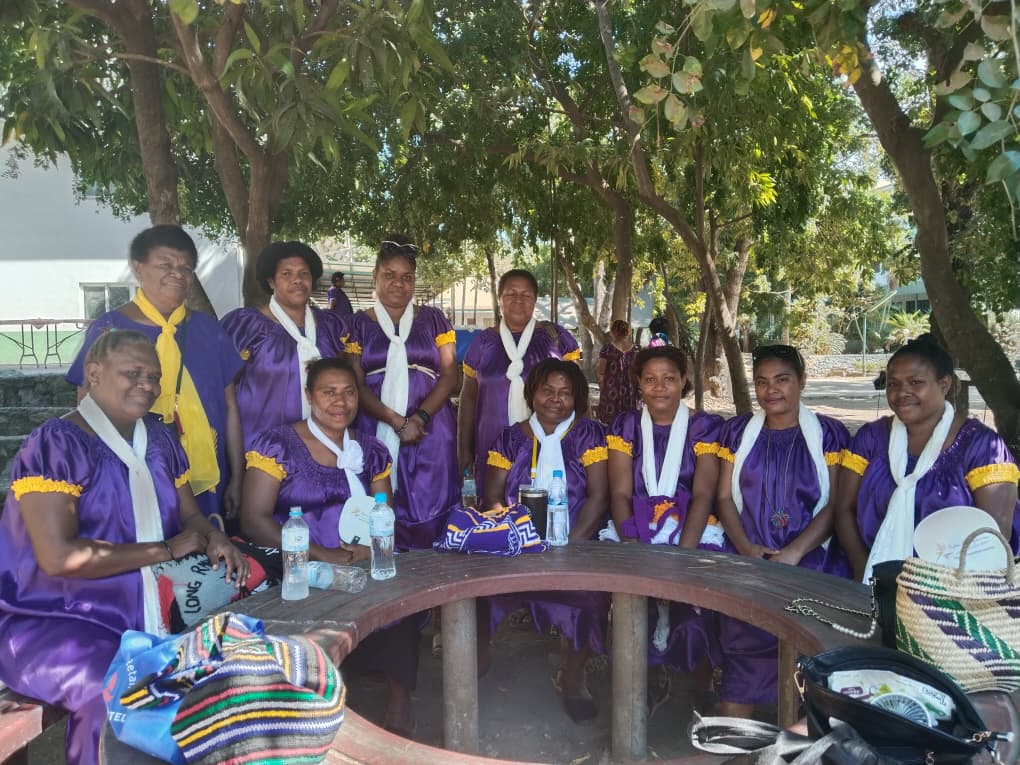
The second part of the celebrations featured a grand Choral Singing Festival involving church choirs, schools, youth groups, and community singing groups from across the four districts.
Widely recognized throughout Papua New Guinea for its strong choir traditions and rich harmonies, East New Britain has long used music and worship as expressions of peace, unity, faith, and cultural identity.
Organizers say the Choral Singing Festival not only showcased talent and tradition but also serve as a symbol of togetherness and hope for future generations.
The celebrations further paid tribute to the province’s visionary pioneers, traditional leaders, and grassroots movements whose determination laid the foundation for provincial identity and self-governance.
Special recognition was accorded to the Mataungan Movement and the Toma leadership movements whose courageous advocacy championed the rights, dignity, and aspirations of the people throughout the Gazelle Peninsula and the wider New Britain region.
The province also reflected upon one of the most defining chapters in its modern history, the devastating twin volcanic eruptions of Mount Tavurvur and Mount Vulcan in September 1994 which destroyed much of Rabaul Town and displaced thousands of residents.
Yet from the ashes, emerged one of PNG’s most inspiring stories of resilience and renewal.
The successful growth of Kokopo as the provincial capital together with the gradual revitalization and reopening of Rabaul Town, continue to stand as enduring symbols of the determination, resilience, and strength of the people.
Today, East New Britain remains one of Papua New Guinea’s leading provinces, renowned for its fertile volcanic soil, world-class cocoa industry, rich fisheries, vibrant tourism sector, and internationally admired cultural traditions including the Baining Fire Dance, Kinavai ceremonies, Tolai choir harmonies, and historical World War II heritage sites.
In preparation of the historic 50th Golden Jubilee in 2027, organizers say this year’s commemoration is not merely about remembering the past but about inspiring the next generation to continue building a province founded upon faith, culture, unity, leadership, and service.
The provincial government is inviting all residents, churches, schools, communities, stakeholders, and visitors to participate in this Sunday’s celebrations.
Moreover, the occasion stands as a proud reminder that the enduring strength of the province has always been found in the resilience of its people, the richness of its culture, and the unity of its communities.