

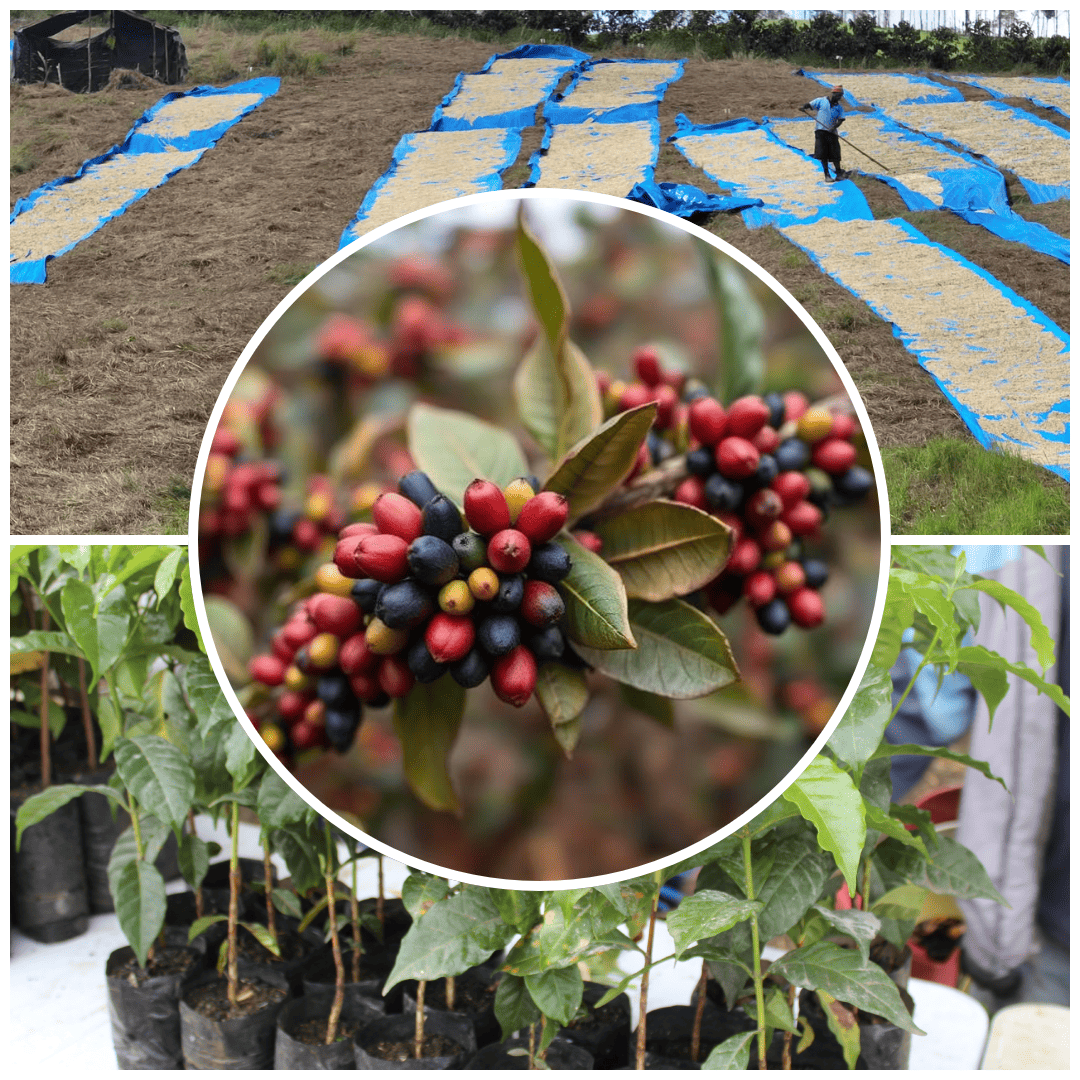
The devastations caused by the El Niño is widespread, in the pacific, a lot of countries are being impacted including Papua New Guinea (PNG) where water and food sources, and cash crops like coffee are being affected.
PNG Hausbung was up in the Highlands of PNG recently where this important cash crop was the focus of attention, and at the recent 70th PNG Agri- fest in Goroka in Eastern Highlands province, much was discovered regarding the struggles and the call for assistance from the affected small holder coffee farmers.
One such farmer is Mr. Andrew Robert. He is a small-scale coffee grower from the Goroka district, and his story is similar to many other farmers in his position in the upper and lower highlands who are being impacted by the El Niño, whether by drought or frost.
Mr. Robert explained that the prolonged dry weather experienced so far has resulted in the coffee berries not ripening despite the coffee bearing flower.
“That’s our issue with this El Nino; therefore, what we want is our district, Local Level Government (LLG) and our Eastern Highlands provincial government to do something to address this matter,” he said.
“What we want is to at least have access to good water supply so we can be able to give water to our crops, especially at this time. So, it can be a win- win situation to ensure production continues, and we being able to sustain ourselves.”
Coffee production and export
PNG Coffee is sort after internationally and it is grown in the highlands region and parts of the coastal regions as well that supply those quality beans, due to the climate and vegetation of these areas.
According to the Coffee Industry Corporation (CIC) Production and Export Statistics, coffee is grown in 16 provinces of PNG, but production is mainly centred in Eastern Highlands, Western Highlands, Jiwaka, Morobe and Simbu provinces. These provinces account for over 90% of production.
East Sepik supplies most of PNG Robusta exports. The Arabica coffees produced in PNG, especially those produced on the larger estates, are considered to be among the finest gourmet coffees in the world.
In 2025, PNG exported more than 1.5 million bags of coffee, something which the Prime Minister hailed as a significant achievement at the start of 2026. It earned approximately K1.31 billion in export revenue. That is a K573 million increase from the 2024 export revenue of K737 million.
The announcement was made by the Minister for Coffee, William Bando at the start of the year.
The Prime Minister noted that global demand for Coffee continues to rise, with studies indicating Coffee could soon become the second most traded commodity in the world after oil. However, the export levels can be maintained with enough good assistance to growers currently facing El Nino impacts.
Assistance needed
Also speaking to PNG Hausbung was Mr. Jonah Negiha, the Regional Land-use Advisor from the Department of Agriculture and Livestock, Provincial Industry and Support Services Highlands Region, based in Goroka.
He said the situation is serious not just for the coffee farmers, but for all other crops in the highlands region that are experiencing dry weather brought on by the El Niño.
“This El Niño is causing a lot of damage. In the lower areas, there is drought. Further up in the mountains, frost is affecting the crops,” he said.
He said there are programs delivered by the Department of Agriculture and Livestock with support from stakeholders to assist farmers; however, there is a big need for further support from the higher ups to ensure better delivery.
The government’s support
Apart from the support on ground from the immediate authorities responsible for agriculture, the National Government is overall doing its bit as well to support coffee growers and producers.
Although it’s not in the form of immediate support like access to water and other necessary items; it will enable access to markets and further support for growers in the long run.
Just on Tuesday 8th September, the Prime Minister opened a new bridge and a new road project in Bena in the Eastern Highlands province where he made a call to the coffee growers in the province to take advantage of the infrastructures to increase coffee production.
“I want you to deliver coffee bags to repay the money we are investing in building infrastructure,” he said.
“There is wealth growing by you through the use of your land, your sweat and your effort, and the road enables the marketing.
“When you improve, the country improves. Together, we all grow.”
In addition to this, the State had initiated El Niño assessments earlier in the year for the potential impact provinces, where the feedback from the teams undertaking this exercise would go towards assisting these provinces.
So, it is hoped that these reports are being attended to and the impacted provinces and districts are actually getting help.
The desired outcome
However, one can say that the El Niño is increasing the price for coffee on the international market, which is a good thing for coffee producers. This is because the El Niño generally pushes coffee prices higher on the world market because it disrupts production in major coffee-growing countries and creates fears of lower global supply.
But for small scale coffee growers like Mr. Robert from the Goroka district, there is not much joy here despite the increased selling price. He said the current price of coffee is good, but farmers stand to lose revenue with the poor harvest of coffee due to the prolonged dry weather. He said better help is what is needed right now.
Indeed, what coffee growers need is support like Water Supply and Irrigation Support, Emergency Financial Assistance, Distribution of Climate-Resilient Coffee Seedlings, and Infrastructure Support.
Supporting small-scale coffee growers during the current El Niño is important because coffee is not just a crop in Papua New Guinea—it is a major source of income, employment, export earnings, and rural livelihoods.