

Papua New Guinea’s higher education system continues to face significant challenges as thousands of Grade 12 school leavers compete for a very limited number of university spaces each year.
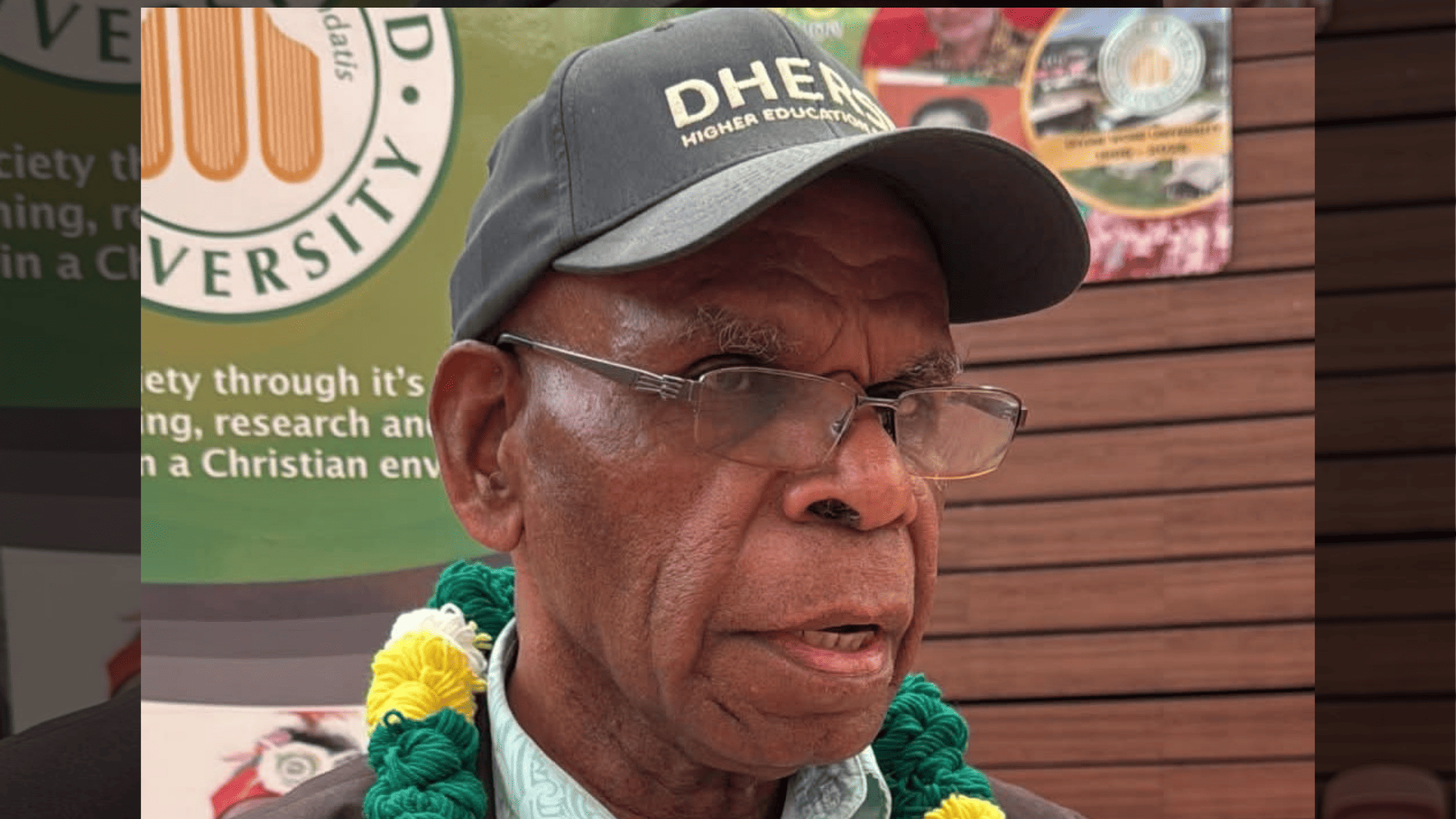
Speaking to students, staff, alumni, families, and partner organizations of the Divine Word University (DWU) Port Moresby Campus, Charles Mabia, Acting Deputy Secretary for Policy and Quality Assurance at the Department of Higher Education, Research, Science and Technology (DHERST), praised DWU for stepping up to solve this national problem.
Mabia explained how the university’s strategy over the last ten years has directly supported government efforts to open up more spaces for students while keeping standards high.
He noted that the university expanded its footprint by partnering with smaller colleges and commended DWU for accomplishing many astounding achievements, especially in the area of implementing government policy on access and quality.
“Affiliation is institutions having affiliation with Divine Word and amalgamation is Divine Word taking over institutions, and therefore that expanded student population, growth in terms of access.”
This strategic expansion has created vital opportunities for both young school leavers and adults already in the workforce who want to upgrade their skills.
Mabia highlighted the huge gap between the number of students finishing school and those actually securing a spot in tertiary institutions.
“In the last five years, almost 30, 000 students passed out of Grade 12 and we have 50, 000 students getting enrolled in our various institutions. And how about others? Where are they?” Mabia asked.
“In helping take in more of these young people, he added, "in terms of providing access, Divine Word has done a good job.”
Looking to the future, Mabia stressed that digital learning will be key to reaching students in distant communities who cannot physically attend a traditional campus.
“In the past, Divine Word created a platform to deliver ICT-enhanced education. Going forward for the next ten years, I know they have the capacity to do that.”
“We know that Divine Word always thinks ahead, has a foresight, and would like to see the university deliver in the next ten years at that advanced stage.”
The strong relationship between DHERST and DWU also directly benefits public service workers through flexible, part-time courses.
“It was professional training for our staff, because we want staff to be on board all the time,” Mabia noted.
“They put up part-time studies with the campus. That is why I committed to the campus for providing that opportunity for our staff, as well as other public service employees.”
As the university moves forward, its primary focus remains on producing graduates who can step straight into helping build their local communities.
Reaffirming the government’s long-term support, Mabia concluded that the university will always be here, and they are going to work with the government to drive access, quality, and relevance in the years ahead.