NEWS SPORTS BUSINESS ENTERTAINMENT
Posts by PNG Haus Bung | PNG Haus Bung
POSTS BY AUTHOR
PNG Haus Bung

PNG Haus Bung

IRC & CENTRAL PROVINCIAL TEAM UP TO IMPROVE REVENUE COLLECTION & SERVICE DELIVERY IRC & CENTRAL PROVINCIAL TEAM UP TO IMPROVE REVENUE COLLECTION & SERVICE DELIVERY
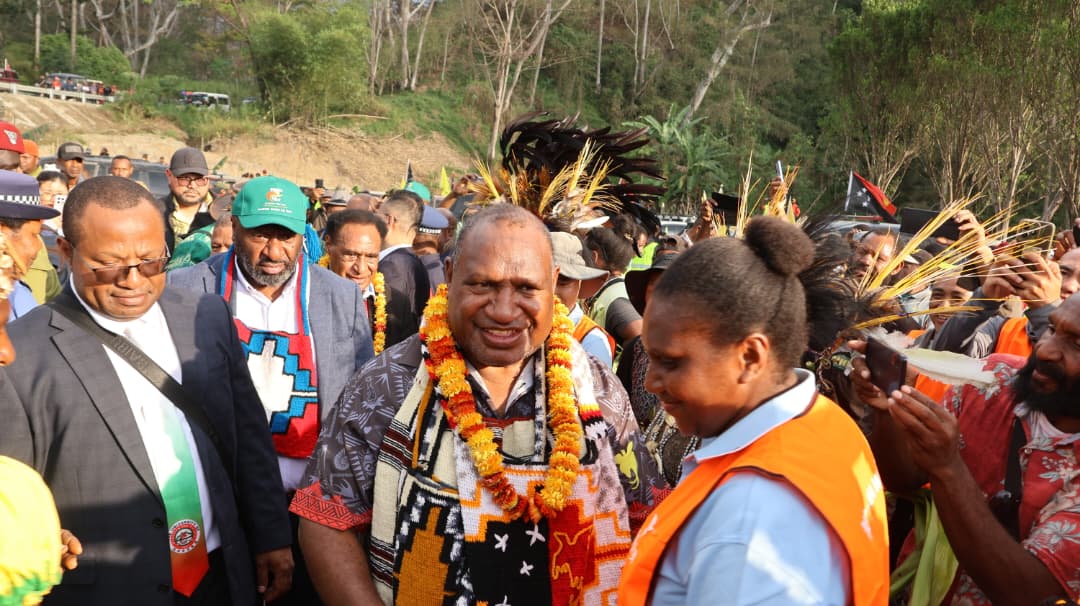
The Internal Revenue Commission (IRC) and the Central Provincial Government (CPG) have reinforced their strategic partnership following a successful two-day engagement in Kwikila, Central Province.The high-level meeting, held from 8–9 June 2026, aimed at strengthening tax compliance, enhancing revenue mobilisation, and improving service delivery outcomes for the people of Central Province.It was attended by Acting Commissioner General Mr. Sam Loi, Central Deputy Provincial Administrator Mr. Bala Kapa, Chief Executive Officer (CEO) Rigo District Development Authority Mr. Murray Konido, Senior Magistrate Ms. Nancy Lipai, and senior officials from IRC, CPG, and the Rigo District Development Authority (DDA).The discussions were centred on deepening cooperation between IRC and CPG through a review of the existing Memorandum of Understanding (MoU), establishment of structured quarterly engagements, and allocation of office space for the IRC Central Provincial Manager within the Provincial Administration.Both parties agreed on the need for a strengthened and more operationally focused MoU to guide collaboration. The revised MoU is expected to be formally executed by 23rd June 2026, providing a framework for improved coordination, accountability, and implementation of joint initiatives.Driving GST Compliance and Revenue Growth; A key focus of the engagement was the implementation of Section 65A GST withholding arrangements, which are expected to significantly enhance compliance, improve revenue collection, and promote transparency in the utilisation of public funds.  The IRC–CPG partnership on GST has progressively strengthened since its inception in 2023, with notable advancements in 2024 and 2025 through improved information sharing and coordinated enforcement efforts.A highlight of the meeting was the presentation of a GST remittance cheque for May by the Rigo District Development Authority (DDA), demonstrating practical compliance under Section 65A.Rigo District continues to establish itself as a benchmark in compliance performance. Between 2023 and 2025, the district achieved an 87% compliance rate, increasing to 97% in 2025, while Central Province recorded an overall compliance level of 98%.Full compliance with Section 65A presents significant fiscal potential, with projections indicating a 37% increase in internally generated revenue from GST by 2027, enabling expanded funding for essential services and development priorities.Acting Commissioner General Mr. Sam Loi emphasised the strategic importance of GST as a sustainable revenue stream.“GST must become the primary revenue source for both the National and Provincial Governments. When provinces actively support effective GST collection, they will generate sufficient revenue to fund their own priorities and progressively reduce dependence on national government grants.”He further urged all withholding entities across provinces and District Development Authorities to emulate the strong compliance demonstrated by Rigo DDA and the Central Provincial Government.In closing, Deputy Provincial Administrator Mr. Bala Kapa reaffirmed CPG’s commitment to: Finalising and signing the MoU by 23 June 2026 Providing office space for IRC within the Provincial Administration Supporting the full implementation of Section 65A GST measuresMr. Kapa underscored the importance of proximity in service delivery: “We welcome IRC closer to our people, because service improves when we work side by side.”He further acknowledged the IRC technical team’s support in taxpayer mapping and compliance initiatives, noting that the partnership continues to strengthen provincial administration capacity.Both IRC and CPG reaffirmed their joint commitment to translate agreements into concrete actions, with a clear roadmap focused on strengthening GST compliance, boosting revenue performance, and delivering tangible benefits to the people of Central Province.
Published on June 11, 2026
PMJM URGES PARLAIMENT TO TREAT BOUGAINVILLE REFERENDUM WITH RESPECT PMJM URGES PARLAIMENT TO TREAT BOUGAINVILLE REFERENDUM WITH RESPECT
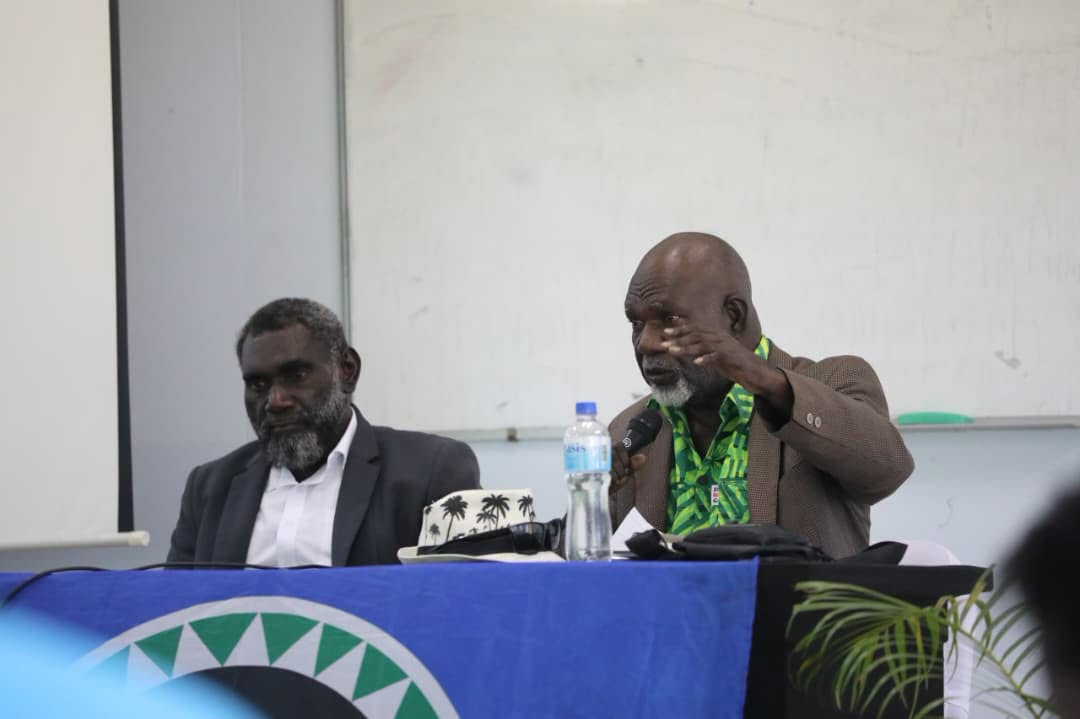
Prime Minister James Marape has called on the National Parliament to handle the 2019 Bougainville Referendum result with maturity, unity and a deep sense of national responsibility, as the long-delayed process formally enters the parliamentary decision stage.Speaking recently in Parliament, Marape described the issue as one of the most significant and sensitive moments in Papua New Guinea’s history, requiring careful consideration of both Bougainville’s aspirations and the country’s constitutional framework.“This is a historic moment, a huge moment,” the Prime Minister said. “The issue before us is sensitive and consequential to our nation’s future, but it is something we cannot ignore. Time is of the essence.”The PM reminded Parliament that the referendum, held in 2019, was conducted under the Bougainville Peace Agreement and is constitutionally mandated under Part XIV of the National Constitution.He said the process had been widely recognised by international observers, including the United Nations, as free, fair and credible, with an overwhelming voter turnout.“The people of Bougainville participated peacefully and expressed their views with clarity and dignity,” Marape said. The result stands at 97.7 per cent in favour of political independence.”While stressing the significance of the result, Marape said it remains subject to the constitutional process requiring consultation and parliamentary consideration before any final determination is made.He told Parliament that Section 342 of the Constitution now requires the National Parliament to formally deliberate and make a decision on the referendum outcome.“The National Parliament must make a decision. This law has stood for the last 25 years,” said PM Marape.PM Marape paid tribute to leaders past and present who have contributed to the Bougainville peace process, including former Prime Ministers Sir Michael Somare, Sir Julius Chan, Sir Mekere Morauta, Sir William Skate, Paias Wingti and Sir Rabbie Namaliu.He also acknowledged Bougainville leaders such as the late President Joseph Kabui, Francis Ona and Peter Tsiamalili Sr, along with others who contributed to the peace agreement signed in 2001.“Without thanking the Bougainville leaders, our thanks to national leaders would be in vain,” he said. “All who have contributed must be acknowledged.”The PM said his government had already taken steps to progressively transfer powers to the Autonomous Bougainville Government, including areas such as land, fisheries and resource management, while maintaining key sovereign responsibilities such as defence, foreign affairs and currency under national control.“My Government stands ready to give every power that enables Bougainville to operate its economy and government effectively,” he said.Marape urged MPs to consider both Bougainville’s position and the broader national interest, stressing that the decision must be guided by reason rather than emotion.“This is an emotional matter, but we must make rational choices collectively. As we think from Bougainville’s perspective, I ask Bougainville to also think from our perspective,” he said. He said Papua New Guinea’s unity and Melanesian identity would endure regardless of the outcome of Parliament’s decision. Marape said, “If it is yes, we will continue. If it is no, we will continue. We are one people under one Constitution.”In a key procedural step, Parliament today adopted a sessional order allowing the Minister for Bougainville Affairs to table the referendum writ and for debate to proceed ahead of a final vote.The motion on whether Parliament accepts the referendum outcome will require a three-quarters absolute majority to pass.Members of Parliament are expected to consult their constituencies before casting what is likely to be one of the most consequential votes in the country’s post-independence history.
Published on June 10, 2026
PNG U-19S FACE DECISIVE QUALIFIER AFTER COOK ISLANDS DEFEATED TONGA PNG U-19S FACE DECISIVE QUALIFIER AFTER COOK ISLANDS DEFEATED TONGA
Papua New Guinea's Under-19 men's football team will face a winner-takes-all showdown against hosts Cook Islands on Friday after the home side recorded a convincing 4-1 victory over Tonga in the OFC U-19 Men's Championship 2026 Qualifiers in Rarotonga.Cook Islands captain Dallas Rongokea starred with a first-half double as the hosts secured their first-ever victory over Tonga at Under-19 level in Oceania Football Confederation competition.The result leaves qualification for next year's OFC U-19 Men's Championship in Samoa to be decided when Cook Islands and Papua New Guinea meet in a crucial final group match.Rongokea opened the scoring in the 16th minute, finishing from close range after a dangerous delivery across the face of goal from Josef Crocombe.The hosts continued to apply pressure throughout the opening half, with Kenya Enoka striking the post and Maui Denny narrowly missing the target before Crocombe doubled the advantage two minutes before halftime.Crocombe reacted quickest after Kima Webb's effort rebounded off the post, slotting home to make it 2-0.Cook Islands then added a third goal in first-half stoppage time when Webb's set-piece delivery found Rongokea at the back post, with the captain heading home his second goal of the match.The hosts effectively sealed victory on the hour mark when a cross from Crocombe was turned into the net by Tonga defender Fetu'u Tonga for an own goal.Tonga managed a late consolation goal through Fonua Moala in stoppage time but were unable to threaten a comeback.The defeat means Tonga finish their qualifying campaign without a point after suffering consecutive losses in Rarotonga.Attention now turns to Friday's highly anticipated clash between Papua New Guinea and Cook Islands, with qualification for the OFC U-19 Men's Championship 2026 in Samoa on the line.The winner of the match will top the standings and secure the lone qualifying spot from the tournament.PNG will be aiming to continue its strong youth football development programme and book its place among Oceania's top Under-19 nations when the two sides meet at the CIFA Academy.
Published on June 10, 2026
SILAG EYES UNIVERSITY STATUS TO STRENGTHEN PUBLIC SERVICE LEADERSHIP SILAG EYES UNIVERSITY STATUS TO STRENGTHEN PUBLIC SERVICE LEADERSHIP
The Somare Institute of Leadership and Governance (SILAG) says its push to become a specialized public service university will help strengthen leadership, governance and workforce development across Papua New Guinea.The institute has completed a major phase of preparations required for university accreditation, bringing it closer to its target of attaining university status by 2027.The achievement follows an intensive five-day workshop involving senior staff and members of the University Accreditation and Establishment Working Committee, who developed the governance and academic frameworks required by the Department of Higher Education, Research, Science and Technology.Committee Chairman Robert Nemala said the work represents more than an administrative exercise."What we've accomplished is not just a procedural milestone—it's a foundation for the future of public service education in Papua New Guinea," Mr. Nemala said.SILAG's transformation aligns with the country's Medium-Term Development Plan IV (2023-2027), which prioritises stronger national institutions, improved governance, and expanded access to quality higher education.As a specialized public service university, SILAG plans to broaden its academic offerings while enhancing research and leadership training opportunities for government officers and future public sector leaders.Chief Executive Officer Michael Barobe said the institute's progress reflects a shared commitment by staff and management to create a centre of excellence for leadership and governance."Teamwork makes the dream work," Mr. Barobe said while commending staff for completing one of the most critical stages of the accreditation process.Mr. Barobe also acknowledged the contribution of Professor Maretta Kula-Semos, whose academic leadership has guided the accreditation preparations.Professor Kula-Semos said SILAG's vision extends beyond achieving university status."We are not just building a university—we are building a legacy of excellence in leadership and governance for generations to come," she said.As preparations continue, SILAG's leadership remains focused on meeting remaining accreditation requirements while positioning the institution as a key contributor to national development and public sector reform.
Published on June 10, 2026
SILAG MOVES CLOSER TO UNIVERSITY STATUS SILAG MOVES CLOSER TO UNIVERSITY STATUS
The Somare Institute of Leadership and Governance (SILAG) has taken a major step toward achieving university status after completing a key set of accreditation requirements mandated by the Department of Higher Education, Research, Science and Technology (DHERST).The milestone follows a week-long intensive workshop in Port Moresby, where senior institute staff developed critical academic and governance documents required under DHERST's university accreditation framework.The workshop, coordinated by the SILAG University Accreditation and Establishment Working Committee (UAEWC), resulted in the completion of 36 key documents, including governance committee terms of reference, institutional policies and narratives addressing national accreditation standards.Executive Director for Higher Learning and Research, Professor Maretta Kula-Semos, described the achievement as a significant breakthrough in SILAG's transition toward becoming a specialized public service university by 2027."These documents are not just administrative checklists," Professor Kula-Semos said."They are highly intellectual, academically rigorous frameworks that form the foundation of a credible and sustainable university."The completed requirements include seven governance committees in terms of reference, 17 institutional policy documents and 12 narratives addressing DHERST standards.SILAG Chief Executive Officer Michael Barobe praised the efforts of the working committee and staff involved in the process."This is one of the most important DHERST requirements on our path to university status," Mr. Barobe said."We are now one step closer to realizing our goal, and it's all thanks to the relentless efforts of our team."The institute aims to become Papua New Guinea's first specialized university dedicated to leadership, governance and public service education.The accreditation process forms part of SILAG's strategic goal of attaining full university status by 2027, expanding its academic programmes and strengthening research capacity.Mr. Barobe said the institute remains focused on meeting the remaining accreditation benchmarks, including infrastructure development, programme accreditation and stakeholder engagement.With the latest milestone completed, SILAG is positioning itself to play a greater role in developing future leaders for Papua New Guinea's public sector.
Published on June 10, 2026
NATIONAL WOMEN'S RUGBY LEAGUE COMPETITION EXPANDS FOR 3RD SEASON NATIONAL WOMEN'S RUGBY LEAGUE COMPETITION EXPANDS FOR 3RD SEASON
The Papua New Guinea National Rugby League Competition (PNGNRLC) has unveiled the draw for the 2026 Santos Cup, with the country's premier women's rugby league competition set to expand its reach across multiple provinces as it enters its third season.The 2026 competition will kick off on July 11-12 following the mid-year representative window, featuring six elite teams competing over eight rounds before a two-week finals series.In a significant step forward for women's rugby league in Papua New Guinea, matches will be played in Port Moresby, Lae, Rabaul, Goroka and Minj, bringing the competition closer to communities around the country.The opening round will feature a highly anticipated Grand Final rematch between reigning premiers Gas Resources Central Dabaris and perennial contenders Bintangor Goroka Lahanis, who have contested the competition's major honours over the past two seasons.Joining the two powerhouse clubs in this year's competition are the Lae Snax Tigers, Wamp Nga Mt Hagen Eagles, ENB Agmark Gurias and Moni Plus NCDC Pom Vipers.The competition schedule also includes several feature events aimed at celebrating and promoting the women's game. Round Five, scheduled for August 8 and 9, has been designated as the "Women in League Round", highlighting the contribution of women to rugby league across Papua New Guinea.The Santos Cup will continue to strengthen its connection with the broader rugby league pathway, with several fixtures scheduled alongside SP PNG Hunters and Digicel ExxonMobil Cup matches throughout the season.Following the completion of the regular season, the top four teams will advance to the semi-finals in Port Moresby on September 6, before the season concludes with the Grand Final at the National Football Stadium on September 13.PNGNRLC Women's Competition Manager Urith Toa said the continued growth of the competition reflects increasing opportunities for female athletes across the country."This year's competition marks the third year of the Santos Cup and reflects the continued growth of the women's game, with matches being taken to more communities across the country," Toa said."We have only been able to see this progress because of the steadfast support of Santos, PacificAus Sports and KMHL. We are excited to provide greater opportunities for our female athletes while allowing fans to witness the skill, passion and commitment that exists throughout women's rugby league in Papua New Guinea."The Santos Cup has become a key component of Papua New Guinea's rugby league development pathway, providing elite-level opportunities for women and strengthening the nation's reputation as one of the sport's emerging forces in the Pacific region.
Published on June 10, 2026
NATIONAL VOLUNTEER SERVICE EXPANDS OUTREACH TO EAST NEW BRITAIN NATIONAL VOLUNTEER SERVICE EXPANDS OUTREACH TO EAST NEW BRITAIN
The National Volunteer Service (NVS) has extended its New Guinea Islands (NGI) regional outreach to East New Britain Province, calling on partner organisations and skilled Papua New Guineans to join its growing volunteer programme.The outreach follows a successful visit to West New Britain and forms part of the implementation of National Executive Council (NEC) Decisions 220 and 335 of 2025. The directives task the NVS, an agency under the Ministry of Defence, with expanding its national network to 900 professional volunteers to help address service delivery gaps in rural and underserved communities.During the visit, the NVS team met with East New Britain Governor Hon. Michael Marum and Provincial Administrator Levi Mano to discuss opportunities for collaboration in key development sectors.NVS management said the partnership aims to deploy qualified volunteers to support health, education, agriculture and community development programmes, while strengthening skills and knowledge at the grassroots level.The East New Britain outreach builds on progress made in West New Britain, where plans are underway to establish the NGI Regional Volunteer Academy at Moramora Technical School.NVS is now encouraging provincial authorities, District Development Authorities (DDAs), churches and non-government organisations to apply as host partners for volunteers. Organisations seeking support must demonstrate a genuine need and be able to provide accommodation and local support for volunteers.The agency is also inviting qualified Papua New Guineans with degrees, diplomas or trade certificates in areas such as healthcare, teaching, agriculture and social work to submit Expressions of Interest to join the programme.Over the past four days, the NVS team conducted awareness activities across East New Britain, visiting tertiary institutions, identifying potential volunteer placement sites, and engaging with key stakeholders. The outreach concluded with a debrief on Radio East New Britain (RENB) on Friday.
Published on June 10, 2026
FAMILY FARMING MODEL DRIVES SUCCESS FOR EAST SEPIK VANILLA GROWERS FAMILY FARMING MODEL DRIVES SUCCESS FOR EAST SEPIK VANILLA GROWERS
For a vanilla farmer, patience is essential. From the moment an orchid flower is pollinated to the time a mature vanilla bean is ready for harvest; the process takes nine months of careful attention and hard work. Every flower must be pollinated by hand, vines require constant monitoring and farmers must contend with changing weather conditions throughout the growing cycle.For many years vanilla farmers in East Sepik Province faced challenges that prevented them from fully benefiting from one of the world’s most valuable spices. Problems affected every stage of production. Farmers struggled with poor farm management, crop diseases, and limited technical knowledge. Curing and processing methods were often based on trial and error, while inadequate storage facilities left harvested beans vulnerable to humidity, spoilage, and theft.Without proper equipment to preserve their harvest, many farmers felt pressured to sell their vanilla immediately. Fear of losing crops to moisture damage or theft often led them to market immature or poorly cured beans. Middlemen offering quick cash benefited from the situation, while farmers accepted low prices simply to avoid losing everything.Among those who experienced these hardships was veteran vanilla grower Nancy Fale, affectionately known throughout the region as Mama Nancy."Vanilla once gave my family a good income and a better life," she recalls. "It felt like a dream, but when the industry faced major challenges, we struggled financially."With nearly three decades of experience growing vanilla, Nancy has witnessed the industry's highs and lows. She has seen prices collapse, watched farmers abandon their crops and observed others return only when international prices rose again.Recognising these challenges, the EU-STREIT PNG Programme, implemented by the Food and Agriculture Organization of the United Nations (FAO), introduced practical solutions aimed at rebuilding the vanilla industry and improving farmers' livelihoods.The support began at the farm level. Farmers received training in improved cultivation techniques, organic treatments to combat vine diseases, and specialised tools for pollination and vine management. These interventions transformed vanilla farming from an uncertain venture into a more organised and productive business.The Programme also focused on improving post-harvest practices, including curing, drying, and packaging. One of the most significant innovations was the introduction of solar drying technology.Traditionally, farmers dried vanilla beans on mats under direct sunlight, often resulting in uneven curing. Pods would become scorched on one side while remaining underprocessed on the other, reducing quality and market value.The solar dryer addressed this issue by distributing heat evenly throughout enclosed drying shelves, producing a more consistent product."The colour is now even all around," Nancy says. "Nice, shiny black beans. That is the best quality."To further improve storage and marketing opportunities, the Programme introduced solar-powered vacuum sealers. This technology allows farmers to store cured vanilla beans for extended periods without losing quality or weight, giving them greater flexibility in deciding when and where to sell.As a result, Nancy no longer feels compelled to accept the first offer that comes her way. Depending on volume and market conditions, she now earns between PGK350 and PGK600 per kilogram. One export sale to buyers in Thailand fetched PGK600 per kilogram—significantly higher than local market prices.Over four years, her family has harvested and sold approximately 200 kilograms of cured vanilla, generating at least PGK70,000 in income at the lower end of the pricing range.Nancy often compares vanilla to cocoa."Cocoa gives you money every two weeks," she explains. "It's like a fortnight pay. But vanilla is different. If you keep 20 kilos and find the right buyer, you can earn a large amount all at once."The income has delivered tangible improvements for her family. Vanilla earnings helped build a permanent family home constructed from timber and concrete, purchase water tanks for reliable access to clean drinking water, and support her children's education through school and college.Improved profitability also encouraged the family to address one of vanilla farming's biggest challenges—crop theft.To protect their investment, Nancy's son, Nollan, established a shade house near the family home. The structure replaced scattered plots located deep in the bush, where crops were difficult to monitor and secure. The new system allows more vines to be grown in a smaller area while protecting plants from harsh weather conditions and keeping them within sight of the family."Farmers lost their love for vanilla because they kept losing their harvest," Nancy says. "The Programme has helped bring back its value."Beyond improving production, the Programme also promoted greater participation and decision-making for women through the Gender Action Learning System (GALS) and its Farming as a Family Business approach.Traditionally, women carried out much of the labour-intensive work involved in vanilla production—including pollination, maintenance, harvesting, curing and processing—yet often had little say in how income was managed.The Programme encouraged families to plan and make financial decisions together, ensuring that both men and women contributed to and benefited from the business.Inspired by the training, Nancy established a women's group and now serves as its chairlady. The group has grown to 50 members and provides support to widows, single mothers and young women who have left school due to unplanned pregnancies."Farming should be a family business, not only the father's business," Nancy says. "When the whole family is involved, the mindset changes."Today, women within the group manage their own vanilla income, participate confidently in family and community discussions, and contribute to household decision-making.Nancy hopes this transformation will spread across East Sepik and beyond.Her advice to fellow farmers is straightforward: harvest only mature beans, follow proper curing practices, protect crops from theft, and work together as a family.A farmer who can protect their crop, process it properly, and choose when to sell is no longer relying on luck or guesswork. They are running a business.Nancy's success demonstrates what is possible when farmers have access to the right knowledge, tools, and support. Now, she hopes more growers across the Sepik region will follow the same path.
Published on June 10, 2026
BUK BILONG PIKININI MARKS WORLD ENVIRONMENT DAY WITH SOLAR ENERGY LEARNING INITIATIVE BUK BILONG PIKININI MARKS WORLD ENVIRONMENT DAY WITH SOLAR ENERGY LEARNING INITIATIVE
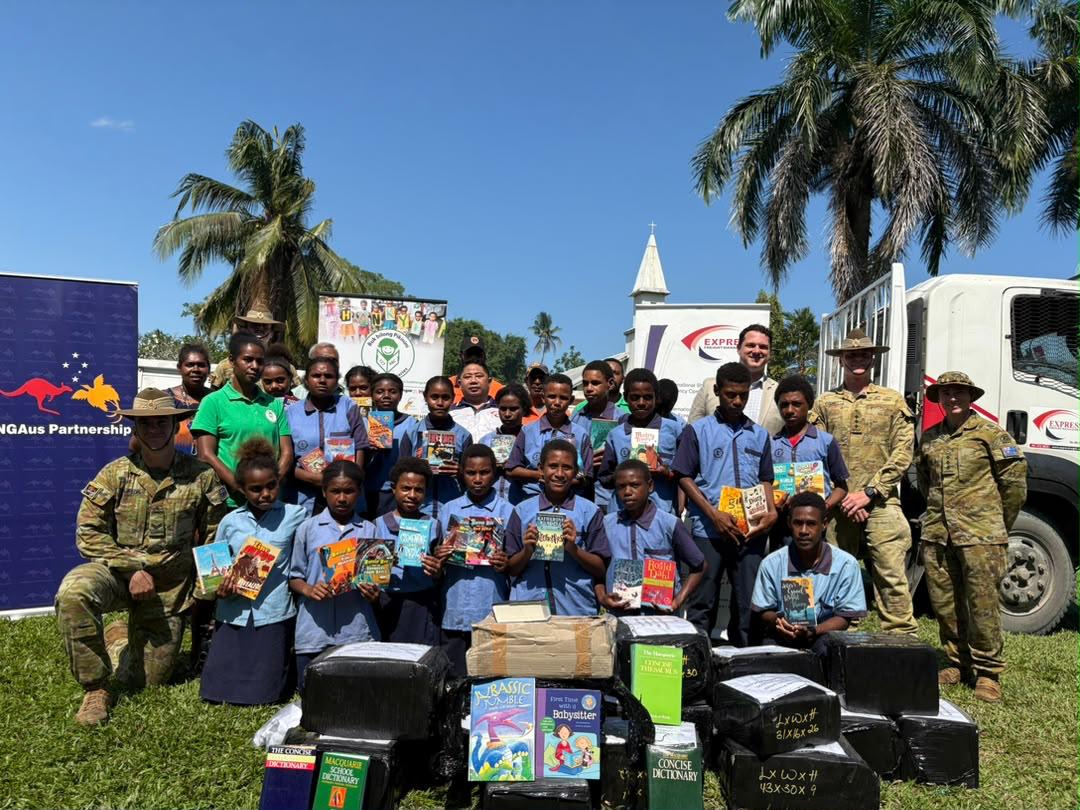
Buk Bilong Pikinini recently marked World Environment Day by engaging children across its Library Learning Centres in educational activities focused on environmental awareness and renewable energy under the theme, "Solar Energy: Clean Light for a Healthy Earth."The was to teach children about the importance of protecting the environment while introducing them to the benefits of renewable energy through interactive and hands-on learning experiences.A key highlight of the celebrations was the distribution of Solar Buddy Lights, donated by schools in Australia.The solar-powered lights provided children with practical STEM (Science, Technology, Engineering and Mathematics) learning opportunities by demonstrating how sunlight can be converted into electricity to generate clean, renewable energy.Through the activities, children learned about the role of solar energy in reducing pollution, conserving natural resources and supporting sustainable communities.The program also helped reinforce the importance of environmentally friendly technologies and responsible environmental stewardship.For many children, the Solar Buddy Lights will provide a reliable source of light for reading, studying and household use, while promoting greater understanding of renewable energy solutions.BbP acknowledged and thanked the Australian schools that contributed the Solar Buddy Lights, noting that their generosity is helping children in PNG gain valuable knowledge about renewable energy while encouraging positive environmental practices.
Published on June 10, 2026
BUK BILONG PIKININI MARKS WORLD ENVIRONMENT DAY WITH SOLAR ENERGY LEARNING INITIATIVE BUK BILONG PIKININI MARKS WORLD ENVIRONMENT DAY WITH SOLAR ENERGY LEARNING INITIATIVE
Buk Bilong Pikinini recently marked World Environment Day by engaging children across its Library Learning Centres in educational activities focused on environmental awareness and renewable energy under the theme, "Solar Energy: Clean Light for a Healthy Earth."The was to teach children about the importance of protecting the environment while introducing them to the benefits of renewable energy through interactive and hands-on learning experiences.A key highlight of the celebrations was the distribution of Solar Buddy Lights, donated by schools in Australia.The solar-powered lights provided children with practical STEM (Science, Technology, Engineering and Mathematics) learning opportunities by demonstrating how sunlight can be converted into electricity to generate clean, renewable energy.Through the activities, children learned about the role of solar energy in reducing pollution, conserving natural resources and supporting sustainable communities.The program also helped reinforce the importance of environmentally friendly technologies and responsible environmental stewardship.For many children, the Solar Buddy Lights will provide a reliable source of light for reading, studying and household use, while promoting greater understanding of renewable energy solutions.BbP acknowledged and thanked the Australian schools that contributed the Solar Buddy Lights, noting that their generosity is helping children in PNG gain valuable knowledge about renewable energy while encouraging positive environmental practices.
Published on June 10, 2026
HUON GULF MP PRESENTS K50,000 TO SUPPORT CHURCH RENOVATIONS HUON GULF MP PRESENTS K50,000 TO SUPPORT CHURCH RENOVATIONS
Member for Huon Gulf and Minister for Community Development, Youth and Religion, Hon. Jason Peter, has presented K50,000 to Bethel Parish Lutheran Church at West Taraka in Wampar Urban LLG to support renovations to the church building and the pastor's residence.The funding fulfills a commitment made by the minister several months ago in recognition of the role churches play in community development, social and spiritual growth.Speaking during the cheque presentation, Minister Peter said churches remain key partners in nation-building, providing guidance and support to families and young people."The church continues to play a critical role in shaping values, promoting unity, and nurturing our communities. This support reflects my commitment to assisting faith-based organizations that serve our people and contribute positively to society.”The funding will enable the parish to undertake much-needed improvements to its facilities, enhancing both worship services and pastoral work within the community.The presentation was attended by the Member's Executive Officer, Mr. David Zemo, officials from the Huon Gulf District administration, church leaders, congregation members, and community representatives.Church leaders thanked Minister Peter for honouring his commitment and acknowledged the district's continued support for the work of the Lutheran Church.
Published on June 10, 2026
EASTERN HIGHLANDS FIRST TO COMPLETE NYES SOCIALIZATION PROGRAM EASTERN HIGHLANDS FIRST TO COMPLETE NYES SOCIALIZATION PROGRAM
Eastern Highlands Province has become the first in the Highlands Region—and the eighth nationwide—to complete the National Youth Engagement Strategy (NYES) 2025–2029 Socialization Program, the National Youth Development Authority (NYDA) announced today.Held in Goroka from 3–5 June, the three-day program brought together government officials, community and church leaders, youth representatives, and development stakeholders to consult on the NYES framework, validate provincial and district implementation plans, and build capacity for youth engagement.Kainantu District was identified as the province’s Pilot District for NYES rollout.Provincial Administrator Mr. Allen Los reaffirmed the administration’s commitment to actively engaging youth in development initiatives, while practical training on the NYES Online Youth Registration System Prepared Community Development Officers for on-the-ground implementation.The program concluded with formal signings of the Eastern Highlands Provincial Joint Inception Implementation Plan and Kainantu District Collaboration Framework, alongside the official launch of the online youth registration system in Kainantu District.The program also showed strong alignment with the Saemaul Undong community development model, which emphasizes collaborative initiatives in agriculture, entrepreneurship, skills development, and ward-level economic growth.Stakeholders noted that NYES will strengthen youth participation in these local development efforts.With Eastern Highlands’ completion, eight provinces have now finalized NYES socialization programs, and the NYDA continues planning for further provincial rollouts.The National Youth Engagement Strategy 2025–2029 provides a national framework for youth development, civic participation, skills training, and livelihood creation across Papua New Guinea, implemented in partnership with government, civil society, and community organizations.
Published on June 10, 2026