

Laboratory data in Papua New Guinea (PNG) has been kept on paper files and local spreadsheet that had limited access to how quick data could be used to guide treatment and public health response, but now a new system will solve this issue.
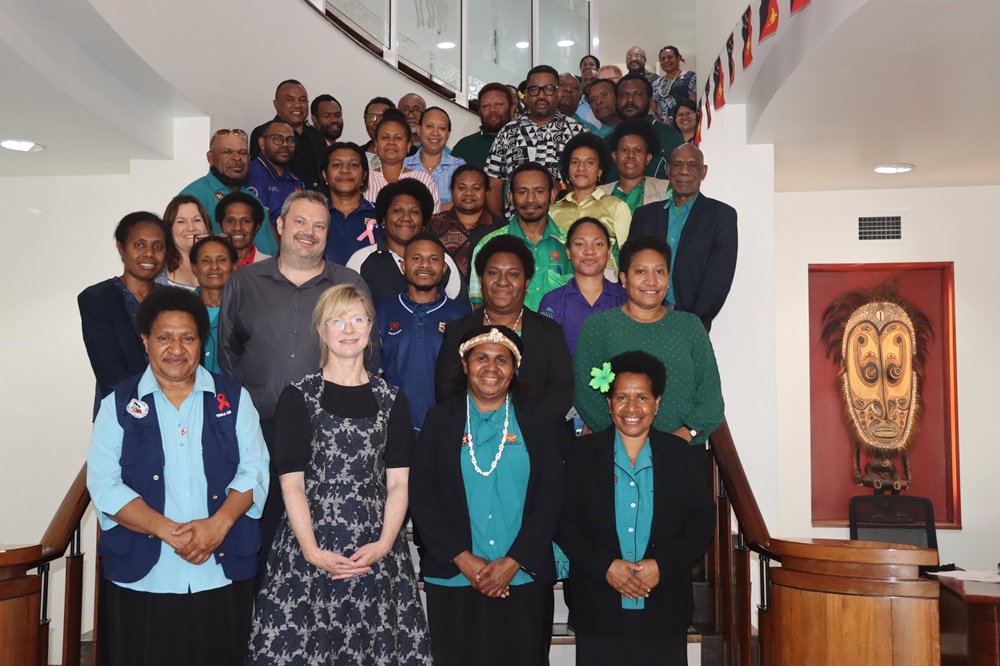
This follows the launch of the OpenELIS Global platform in which the Australian government is supporting by digitizing Papua New Guinea’s health information management system.
According to a statement, Australian High Commission Minister-Counsellor Madeleine Moss, the system is a critical step in strengthening PNG’s health architecture, allowing clinicians to deliver rapid, accurate diagnosis results and direct life-saving resources exactly where they are needed most.
“Together, Australia and PNG are building secure, reliable laboratory systems that will protect and serve communities right across the nation,” she said.
The OpenELIS Global platform will transform isolated, paper-based operations to a fully integrated, real-time digital health network.
It serves as the Laboratory Information Management System (LIMS) platform and will strengthen laboratory data management, reporting, and connectivity across the health system.
Executive Manager, Disease Control, Health Security & Surveillance Division, Dr Pilly Mapira said, “We are laying the foundation of a national, integrated digital health network that will ultimately connect medical and public health laboratories across every single province of this country.”
“This is a system built with Papua New Guinea, configured to our specific clinical testing needs, and managed entirely by our local workforce,” she said.
Papua New Guinea currently carries one of the heaviest burdens of disease in the region, actively combating malaria, HIV, drug-resistant tuberculosis, and the growing challenge of antimicrobial resistance.
The Laboratory Information Management System (LIMS) will enable secure digital tracking of every sample and result; from the moment a sample arrives until the result reaches the clinician.
The system covers Central Public Health Laboratory (CPHL)’s six laboratory sections: HIV, Tuberculosis, Malaria, Sero-Surveillance, Microbiology and Molecular Biology.
It also connects directly to automated analyzers, so results can be transferred electronically, eliminating manual re-entry.
CPHL, Director of Laboratory Services, Mr. Willie Porau, said the launch resulted from months of work by laboratory staff, who tested and validated each section.
“What began as a small proof-of-concept pilot has grown, section by section, into the system we are launching today. Our staff undertook user acceptance testing and training. They raised issues when things did not work as they should, and they kept raising them until those issues were resolved. That persistence, from a team who already carries a full daily workload, is the real foundation of this system,” he said.